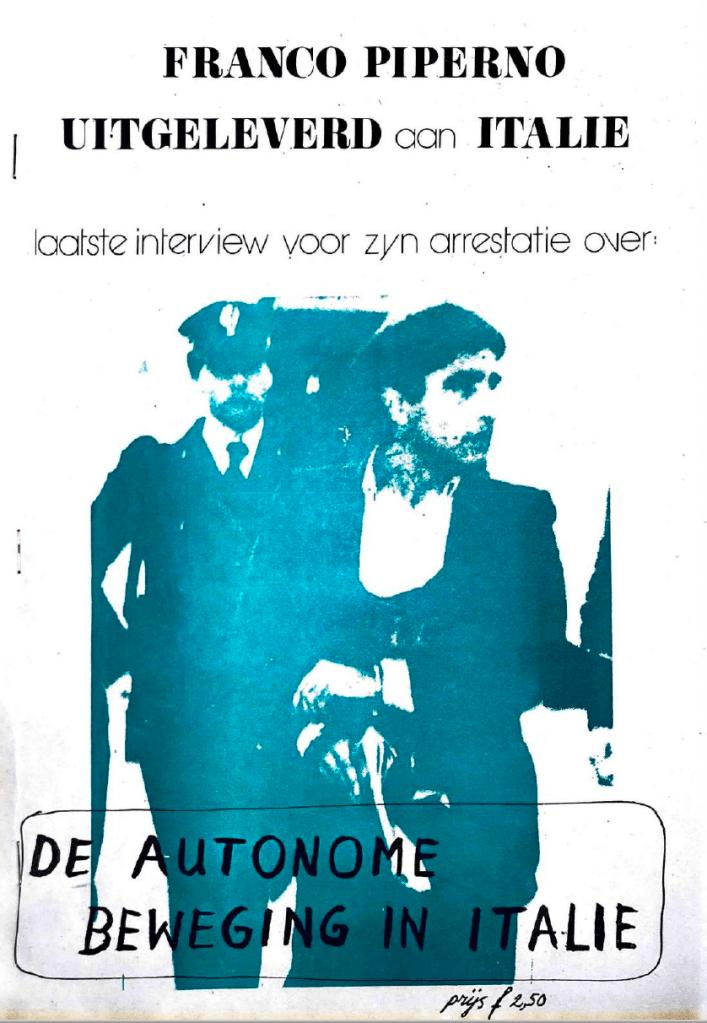
“Franco Piperno Uitgeleverd aan Italie: Laatste interview foor zyn arrestatie over: De Autnome Beweging in Italie” (1980)

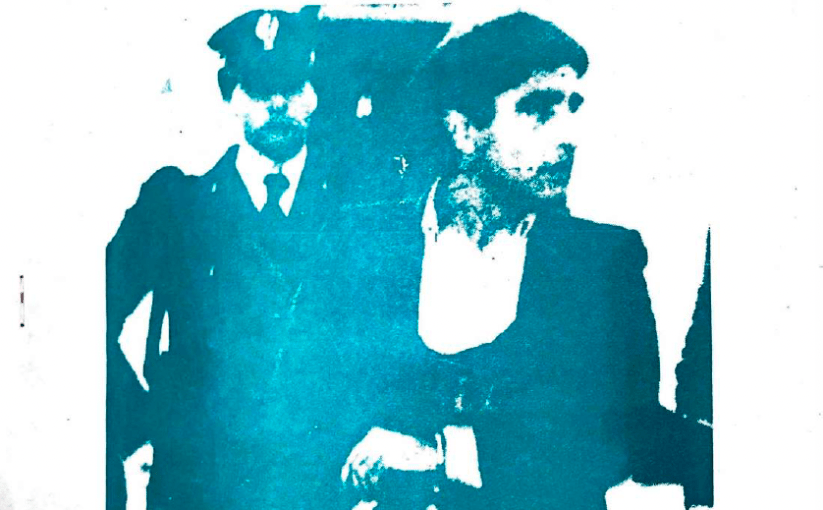
Franco Piperno, a physicist and founding member of Potere Operaio, was one of many militants targeted by the Italian authorities, following the kidnapping and subsequent killing of Aldo Moro by the Red Brigades in 1978. He was a founder of the autonomist journal Metropoli (along with Oreste Scalzone and others) whose editorial team was targeted in the 1979 sweep against the radical left.

Piperno fled to France, and was extradited in 1979 on charges related to the Moro kidnapping. Those charges were subsequently dropped, with the Christian Science Monitor noting that they illustrated “the penchant of Italian police to often arrest first and hope to find concrete evidence later.” Piperno went back to France and was subsequently arrested twice during the fall of 1981 in Montreal (Canada). Subsequently, Piperno – with strong international support – won a fight against extradition back to Italy, only to be arrested again, for a third time, on additional charges; he subsequently beat that case. With a tourist visa expiring, Piperno sought to leave Canada and go back to France, only to be refused entry. He then filed for refugee status in Canada. In 1988, he returned to Italy, where, having been sentenced to 10 years of incarceration, he served a reduced prison sentence. (The CIA was a bit contemptuous of him). He has since been involved in other projects.

The international organizing in support of militants targeted by the Italian state in 1979 is a story in need of its own book(s). Interesting pieces of that struggle include Marty Glaberman (and Toni Negri’s) lawsuit against a voice expert in Michigan, the Committee Against Repression in Italy coordinated by Federici and Caffentzis, the organizing of Guattari and Moulier-Boutang’s Centre d’initiatives pour de nouveaux espaces de liberté (CINEL), etc. For those interested in a starting point, it’s worth looking at Red Notes’ fantastic collection Italy 1980-81: After Marx, jail! The attempted destruction of a communist movement, available here.
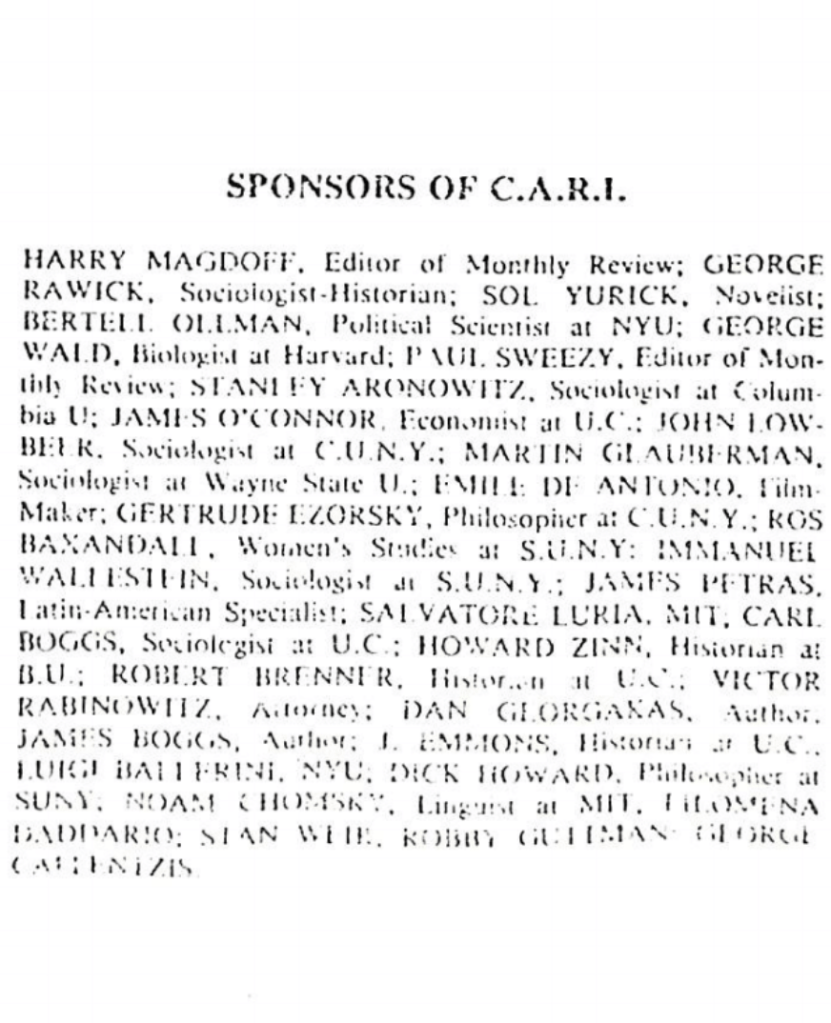
From the ninth issue of the Committee Against Repression in Italy, courtesy of Arlen Austin’s scanning

The subject of this post is the second of two pamphlets put together by activists in the Netherlands who were concerned about the repression in Italy and similars developments elsewhere. The first of the two pamphlets was put together by the Komite Bella Italia and participants in the psychiatry journal Narreschip, entitled “De autonome beweging in Italië,” and published in 1979. The second of the pamphlets, with the focus on Piperno, was put together by two participants in the Narreschip project, Martijn Bool and Ronald Kampman. Per the introduction, their interest is not just in Piperno but in the wider meanings of cases against activists internationally:

“We are not only interested in Piperno, but also in the fact that it is an example of how in Western Europe the (certainly outdated, dating from the King’s era) right of asylum is being eroded, and how there is an ever-increasing judicial and police cooperation at the European level: the creation of a European judicial area.”

(Translation via DeepL).

The two writers go on to note, “This brochure is written by two people from the group that made the first brochure. In itself we like to make such a brochure, but we have also become lonely, unpaid journalists; that means a lot of work, especially since there are only a few of us.” While they appeal for others to take up their project and engage in dialogue, we could not find published evidence of that having occurred.

The main text of the pamphlet is a Dutch translation of Piperno’s last interview prior to his extradition to France in 1980. The interview was done for the French journal Liberation (we, unfortunately, could not locate a copy online). The pamphlet also includes a court statement from Piperno and a call for Piperno’s freedom, written by CINEL.

This pamphlet is rare. We locate one copy, via OCLC, at the Institute of Social History in Amsterdam. As we could not find a copy online, we scanned it (not too well) and posted it on Libcom, here.

(Last update – November 11th, 2023).
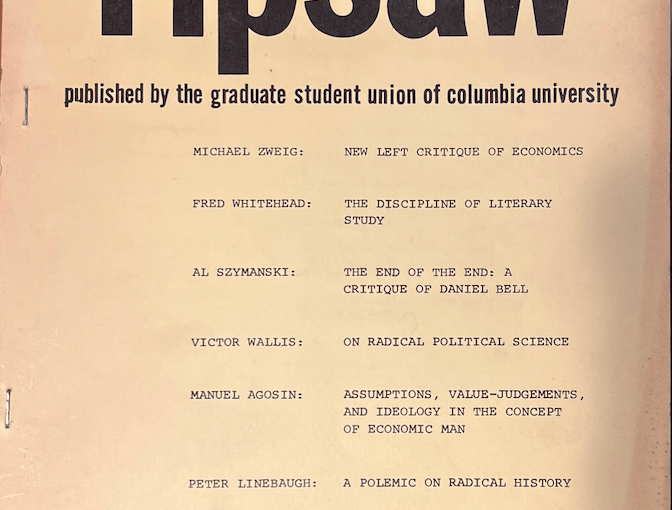
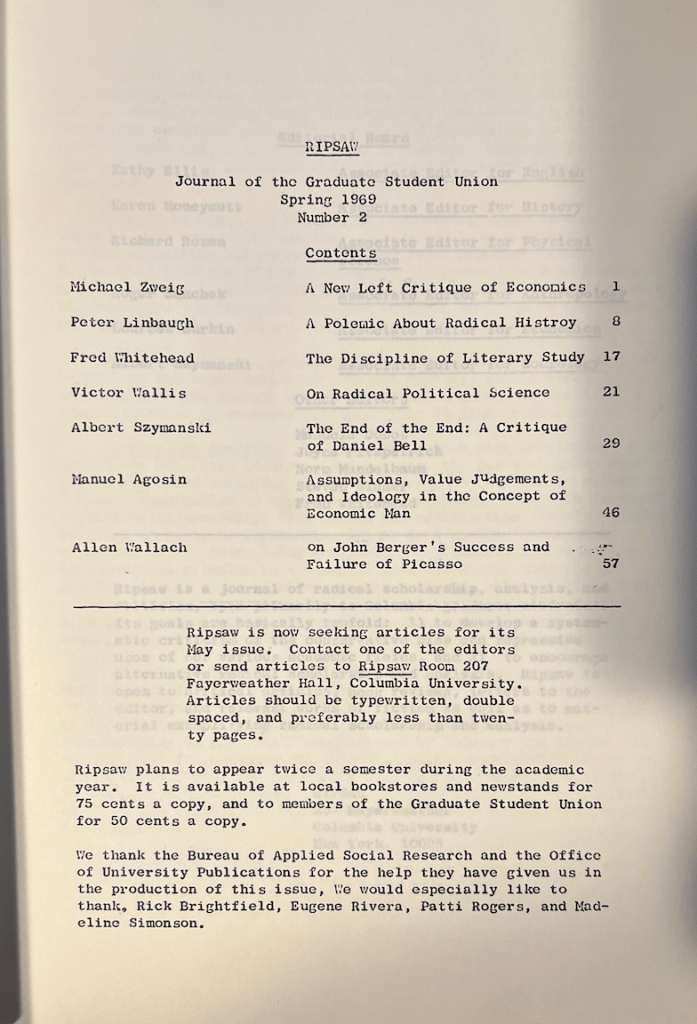
Peter Linebaugh, “A Polemic on Radical History,” in Ripsaw #2 (Spring, 1969)

Early essay written by historian Peter Linebaugh in 1968, published in Ripsaw, the radical student journal of the Graduate Union of Columbia University.

An early piece by Peter Linebaugh – editorial member of Zerowork and collective member of Midnight Notes – who would go on to write the seminal work The London Hanged (1991).

The essay is very much a work of its time. Couched within the historiography of the period, its targets are the “New History,” with its move toward quantification, its use of specific jargon, and its positivism. He gets some digs in at Staughton Lynd and the historicans associated with Radical America, which was interesting. The influence of EP Thompson, Linebaugh’s mentor, is clear.

Ripsaw published a total of 5 issues, the first two with the tagline “published by the graduate student union of Columbia University,” and then after that by the “graduate students at Columbia University.” As we understand it the journal ceased publication in 1970.

Interestingly, few copies of Ripsaw are held by institutions. We locate a complete set of 1-5 at NYU, but even Columbia only seems to have 1-4. Number two is held by just a handful of schools, per OCLC.

The Linebaugh article is of interest for our project, but the other pieces less so. Accordingly, we have scanned his article and placed it on Libcom, here.

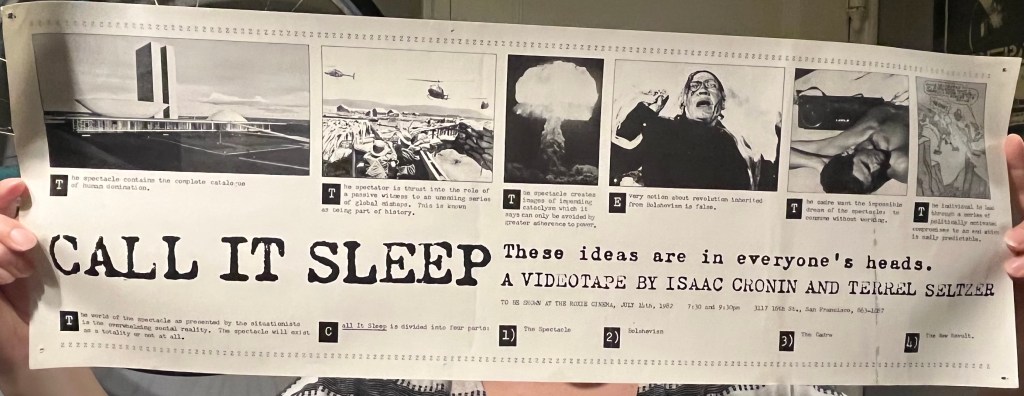
Isaac Cronin & Terrel Seltzer. Call it Sleep. Poster for the film’s second showing, in 1982, at The Roxie in San Francisco.

Our copy of the poster

Call it Sleep is a situationist film created by Isaac Cronin and Terrel Seltzer. Released in 1981, the film has become a bit of a cult classic for those interested in situationist ideas in the decades since. It is available for free online via YouTube, here. It really is quite well done and we strongly recommend watching it.

While copies of the film script are often available in the trade, copies of the poster used to advertise individual screenings are far less common. OCLC locates no institutional holdings. Our copy is for a July, 1982 screening at The Roxie in San Francisco.

According to Cronin, the event at The Roxie was the second public showing of the film and some 600 people attended. Readers can hear him discuss the development of the film in a very helpful interview done by Aragorn! (RIP) on the The Brilliant podcast, here.

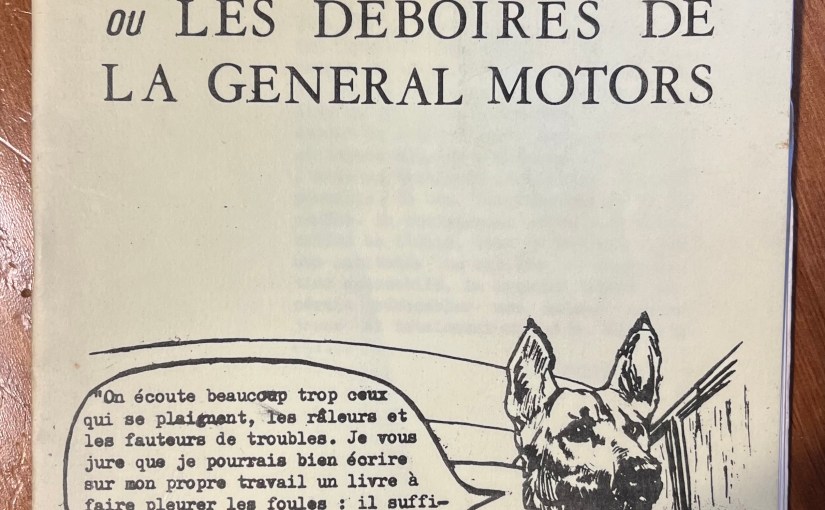
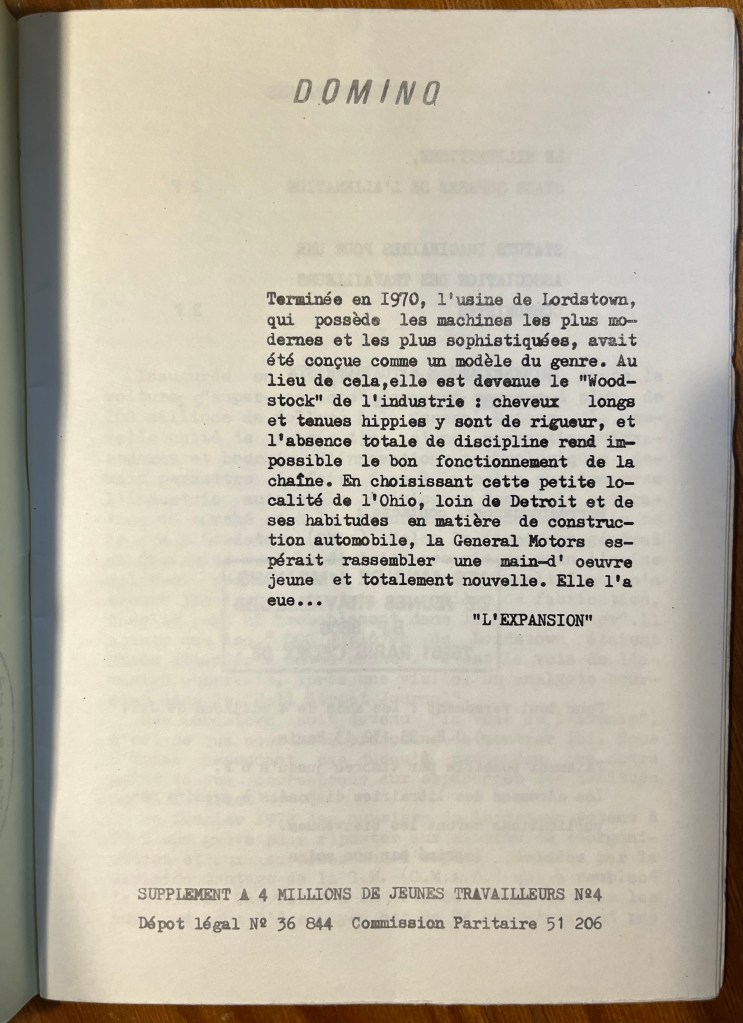
Anon. “Lordstown 72 ou Les deboires de la General Motors”. First edition (1973).

First edition of this pamphlet, published without authorship, in 1973. While it is often stated that the pamphlet was published in 1977, that doesn’t make sense from the content of the essay, which is clearly contemporaneously written during the upsurge of factory-based struggles in the early 1970s. The 1977 edition refers to the second edition, which was published by Editions de l’Oubli and includes a notation that the first edition was published in 1973.

This essay is a powerful communist analysis of the struggles at the GM plant in Lordstown, Ohio, that was opened in 1970. In 1972 the overwhelming majority of workers voted to authorize a strike. But Lordstown 72 focuses less on the strike authorization or actual strike than on the culture of working class sabotage and self-organization that it occurred in.

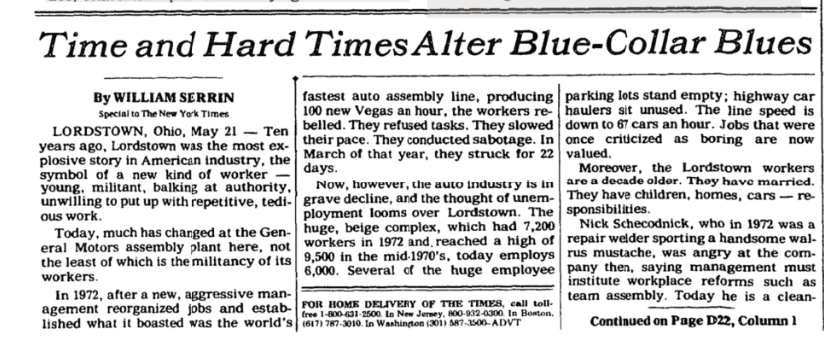
“Time and Hard Times Alter Blue-Collar Blues,” cover page of the New York Times May 25, 1982.

The essay is a striking assessment of the generalization of sabotage and everyday resistance, which occurs in context of widespread forms outside of the union and party structures. The author(s) analysis seamlessly flows from shop-floors in the U.S. to those in Italy and elsewhere. From a culture of resistance the author(s) then try to locate seeds of communism in the workers’ struggles.


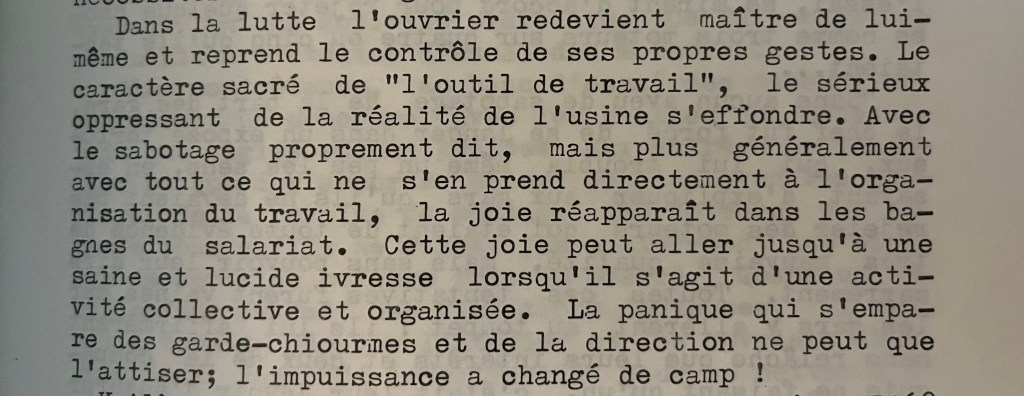
In the struggle, the worker regains control of himself and his own movements. The sanctity of the
“tool of the trade”, the oppressive seriousness of factory reality, collapses. With sabotage itself, but
more generally with anything that directly attacks the organization of work, joy reappears in the
prisons of wage labor. This joy can even lead to a healthy, lucid intoxication when it comes to
collective, organized activity. The panic that grips the guards and management can only fan the
flames; impotence has changed sides!” (translation via Deepl, so there may be errors).

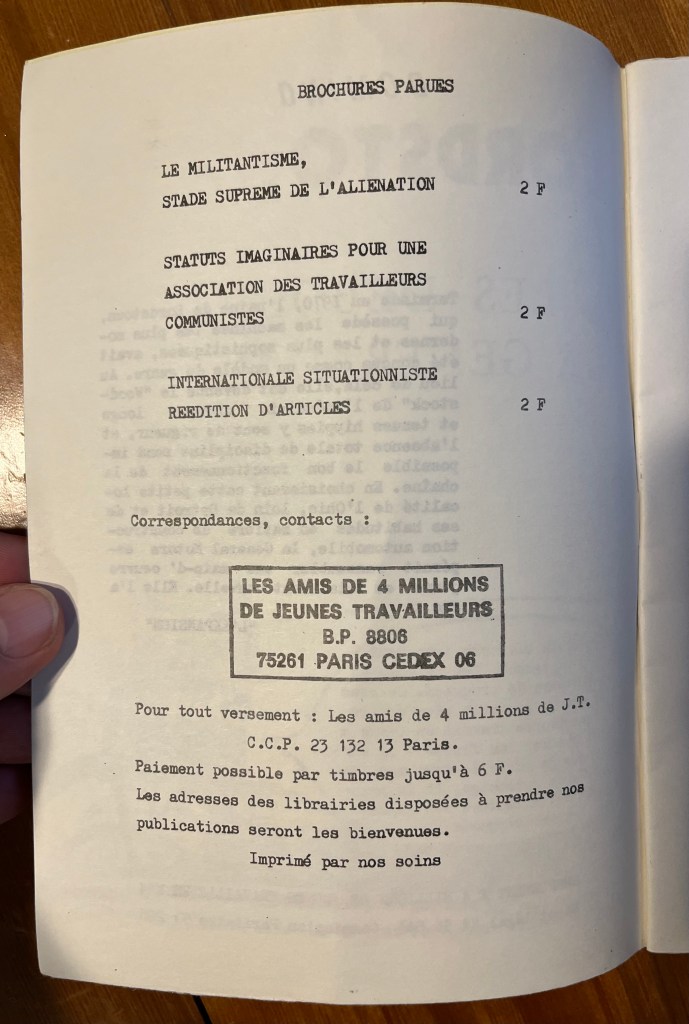
As mentioned above, the first edition of the pamphlet stated no authorship. The second edition would attribute its authorship to “Pomerol et Medoc,” though those appear to have been pseudonyms. The pamphlet was produced as a supplement to the fourth issue of 4 Millions de Jeunes Travailleurs and published, presumably by the same people, under the moniker of Les Amis de 4 Millions de Jeunes Travailleurs. The group published a number of relatively important essays within the French ultra-left milieu of the 1970s, as well as a collection of pieces from the Internationale Situationniste. The major figure behind the project, at least from what we could find online, was Dominique Blanc, who would later go on to found the antisemitic journal La Guerre Sociale.

The first edition of the pamphlet is rare. Copies very rarely show up in the trade. We did not locate any on OCLC but copies are probably held in one of France’s anarchist libraries.

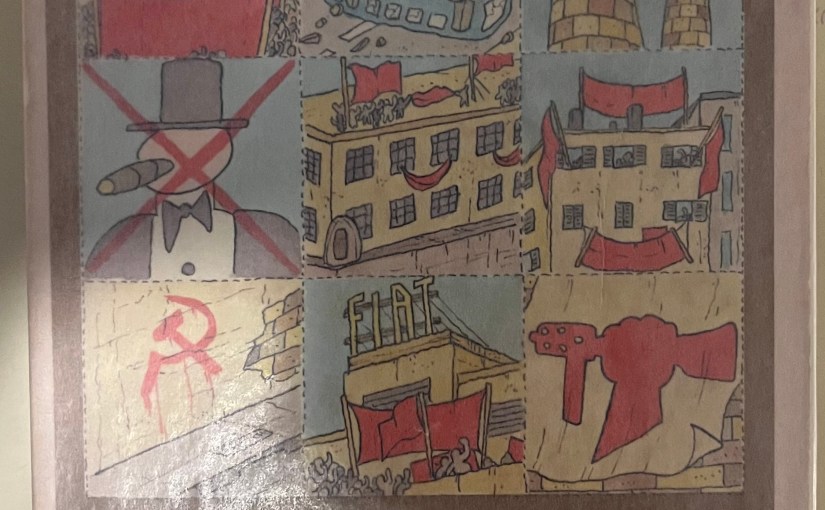
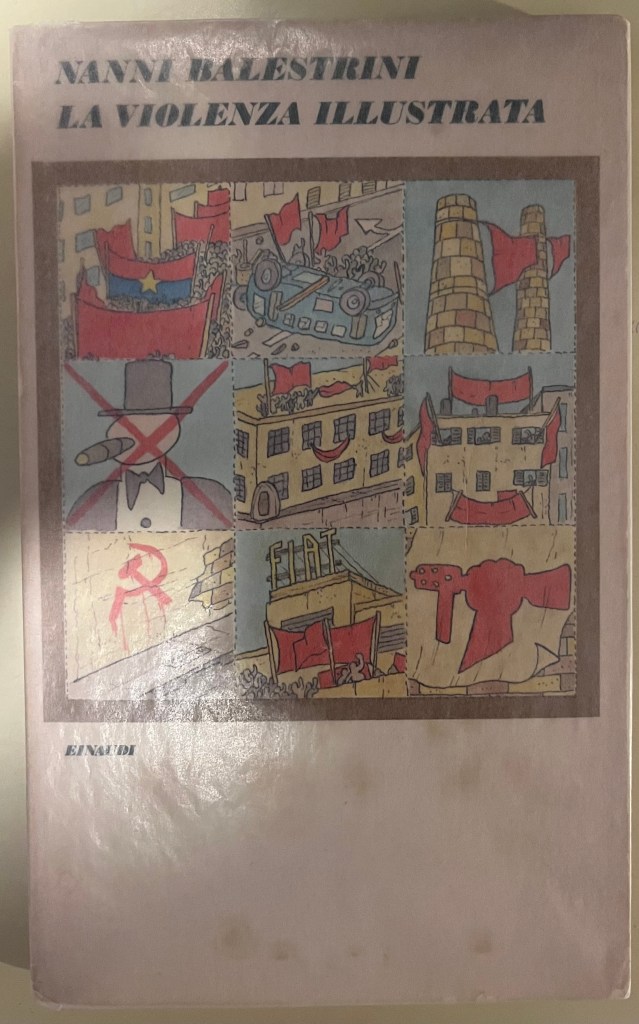
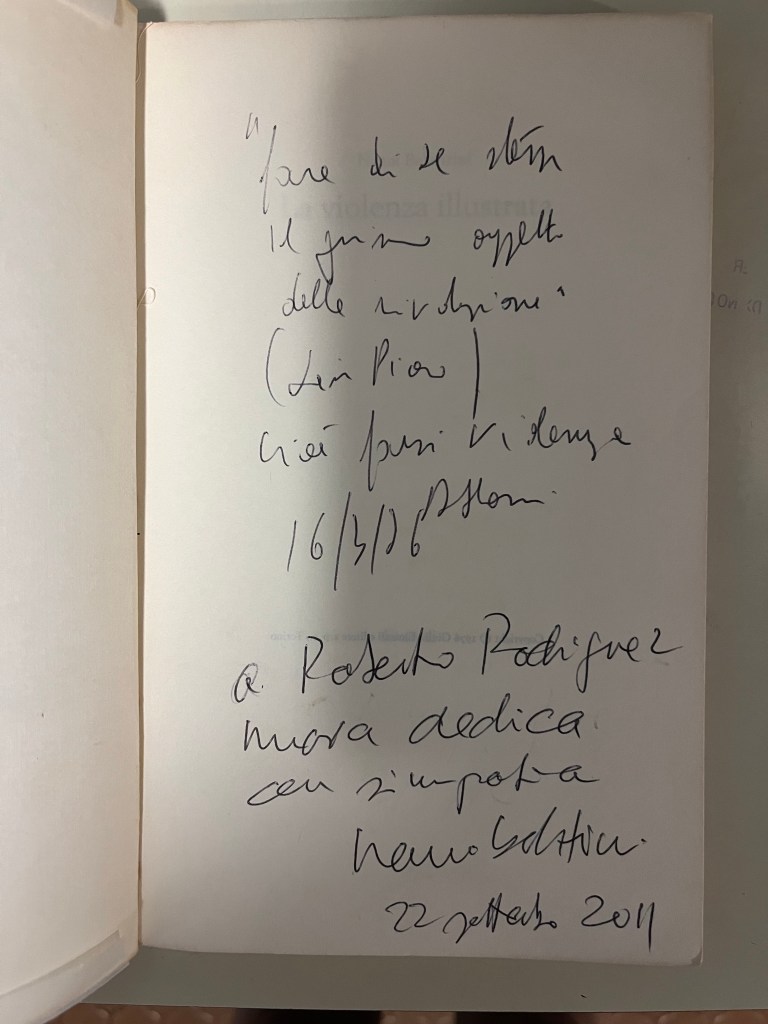
Nanni Balestrini, La Violenza Illustrata (1976), twice inscribed.

First edition of La Violenza Illustrata, the important third novel by brilliant Italian poet, novelist and militant, Nanni Balestrini, who passed away in 2019. To our knowledge the novel has not yet been translated into English.

First editions of the book, whose cover features the artwork of Pablo Echuarren, are common, but our copy is unique in that it was inscribed by Ballestrini twice – first in 1989 and again in 2011.

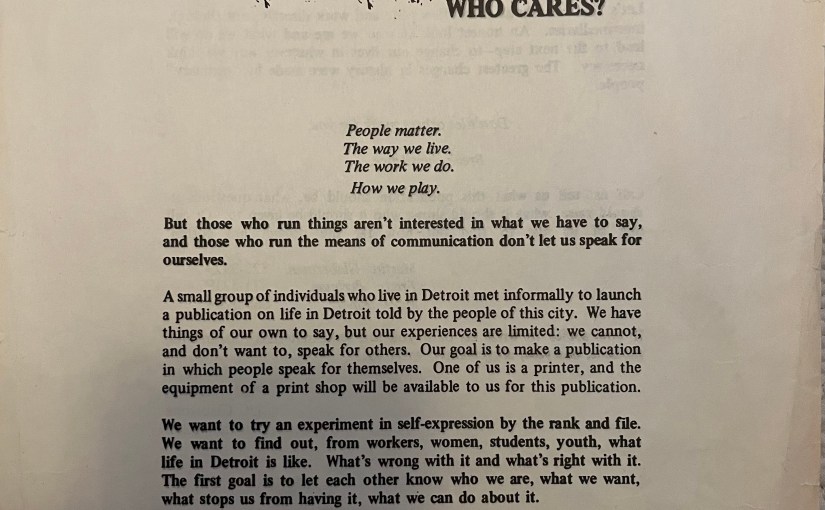
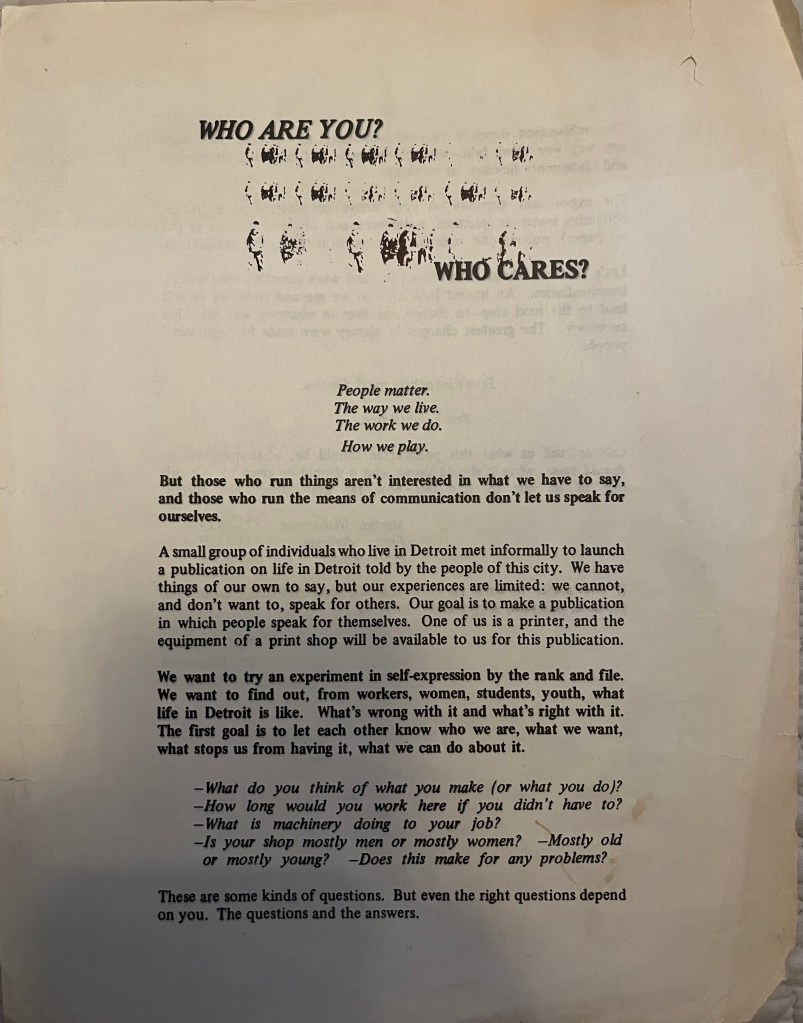
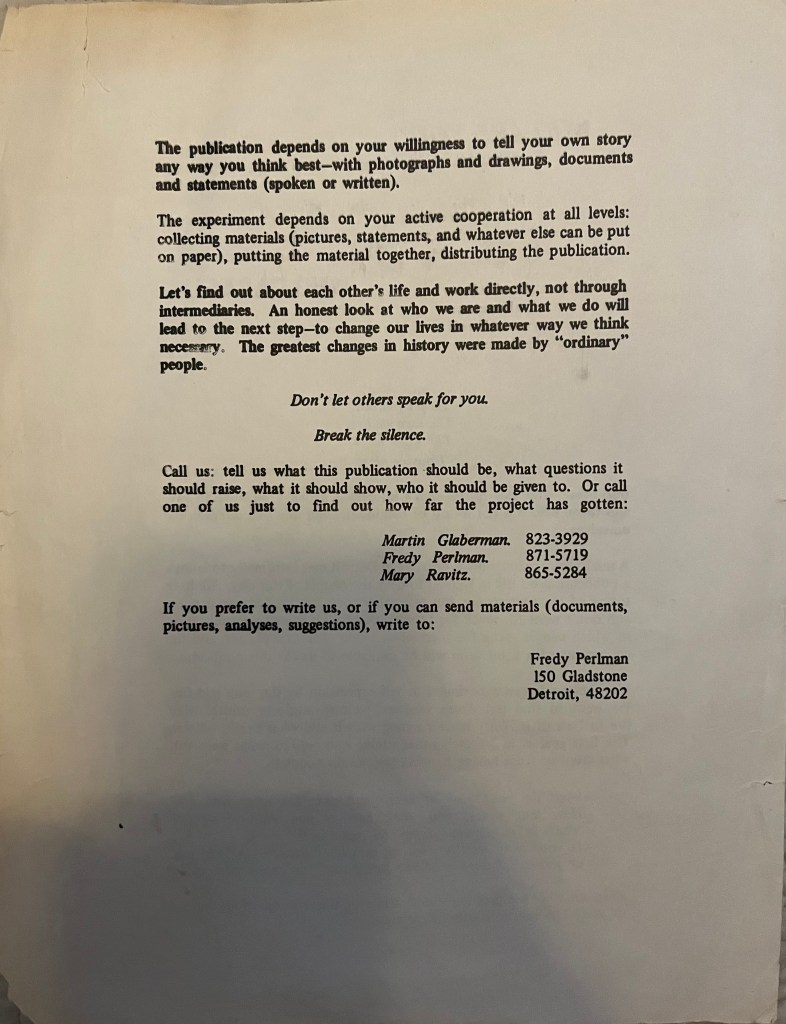
Martin Glaberman, Fredy Perlman, Mary Ravitz. “Who are you? Who cares?” (1969)

Flier produced at the Detroit Printing Co-Op in 1969 by Fredy Perlman, Marty Glaberman and Mary Ravitz. Glaberman will be well known to readers of this blog.

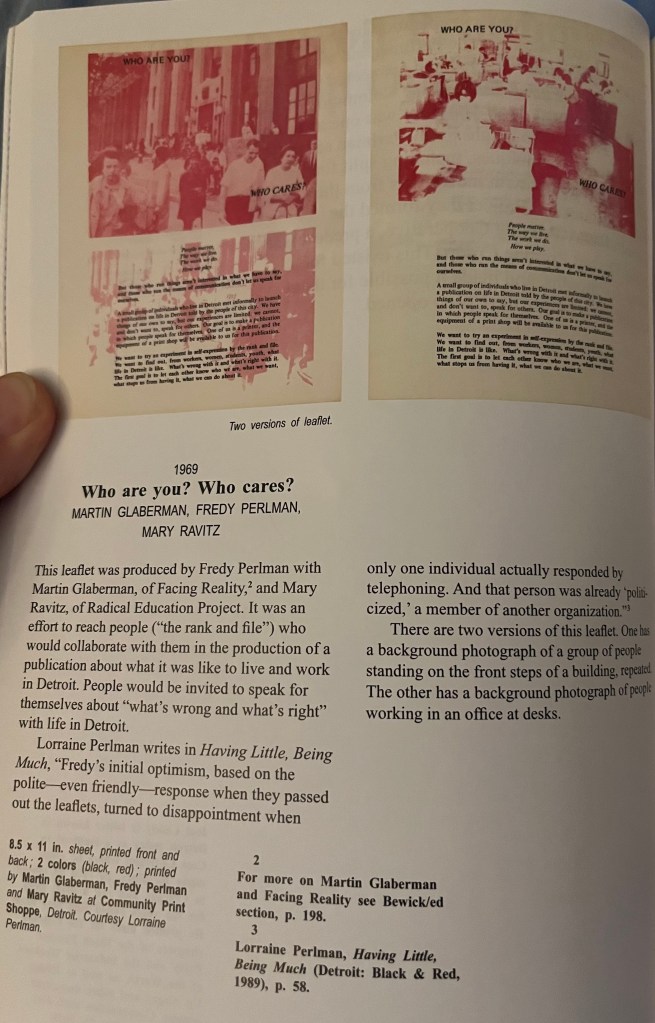
Danielle Aubert, in her wonderful book The Detroit Printing Co-op: The politics of Joy of Printing, gives a brief history of the document that we include below. Aubert notes that there are two versions of the flier, both of which have red photo’s in the background. Our unique copy, which has clearly had a dramatic life, differs from both of the fliers noted by Aubert – there is no picture and the spacing between “Who are you?” and “Who cares?” is reduced.

From Aubert’s book:

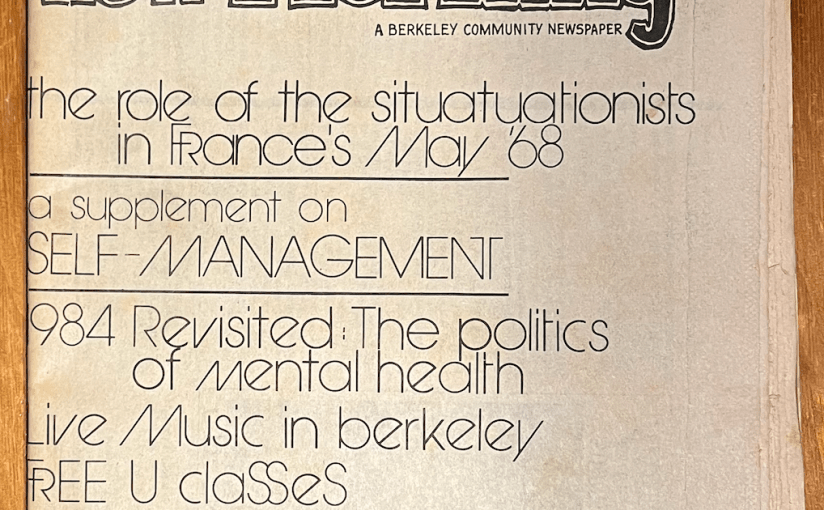
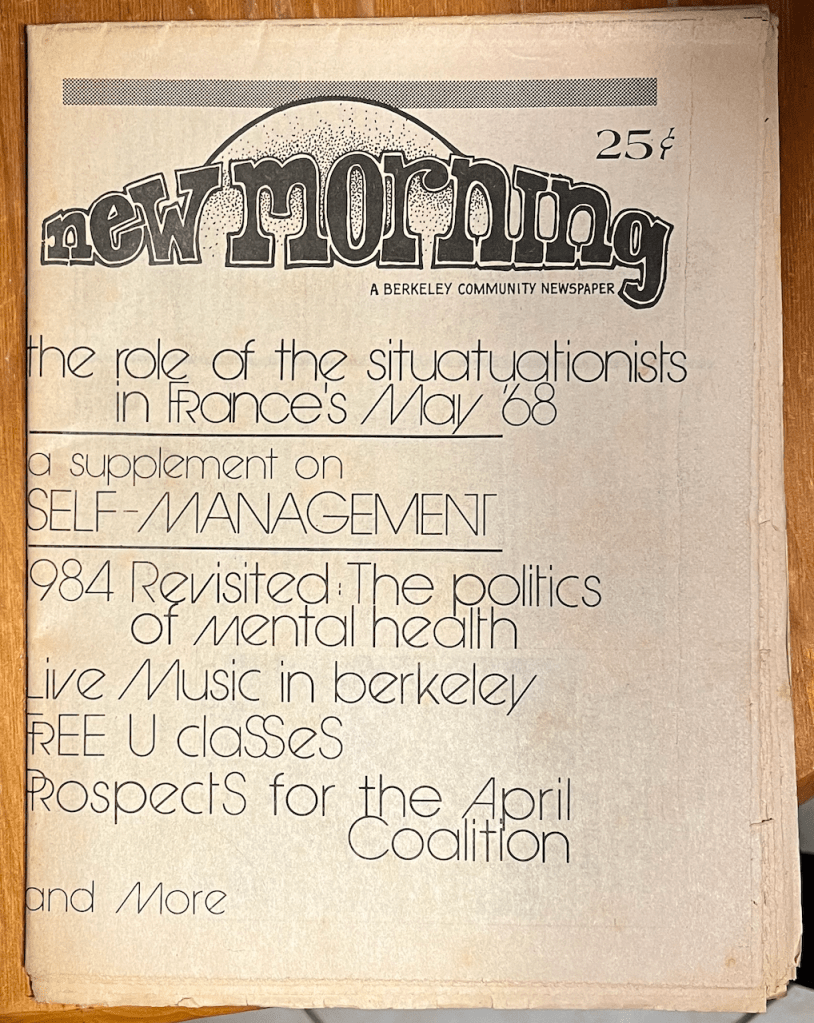
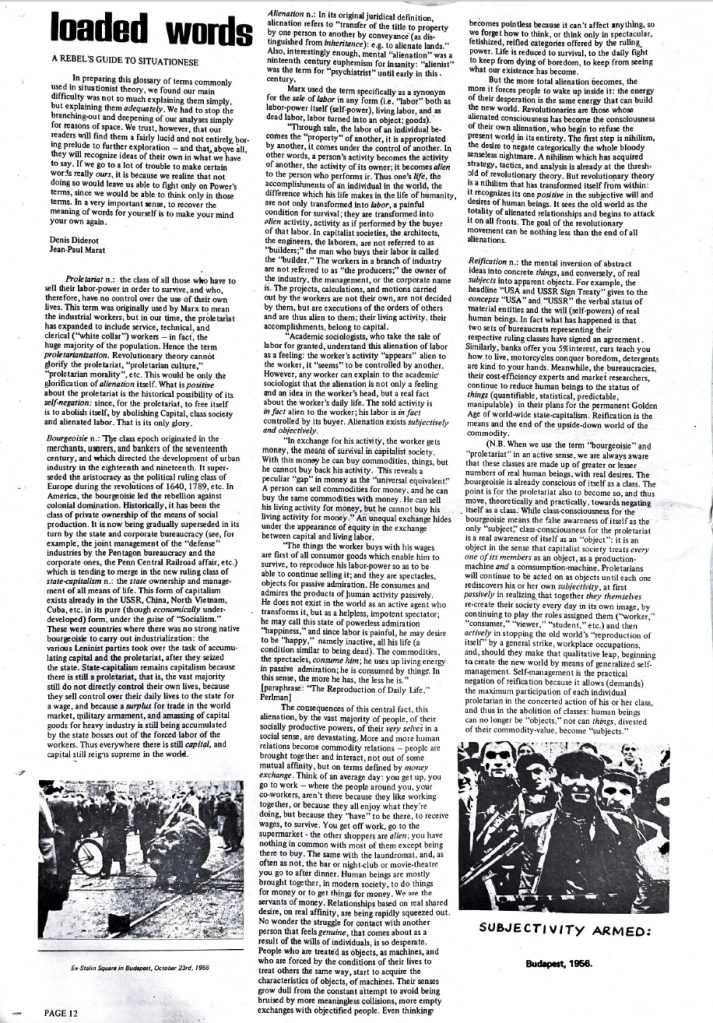
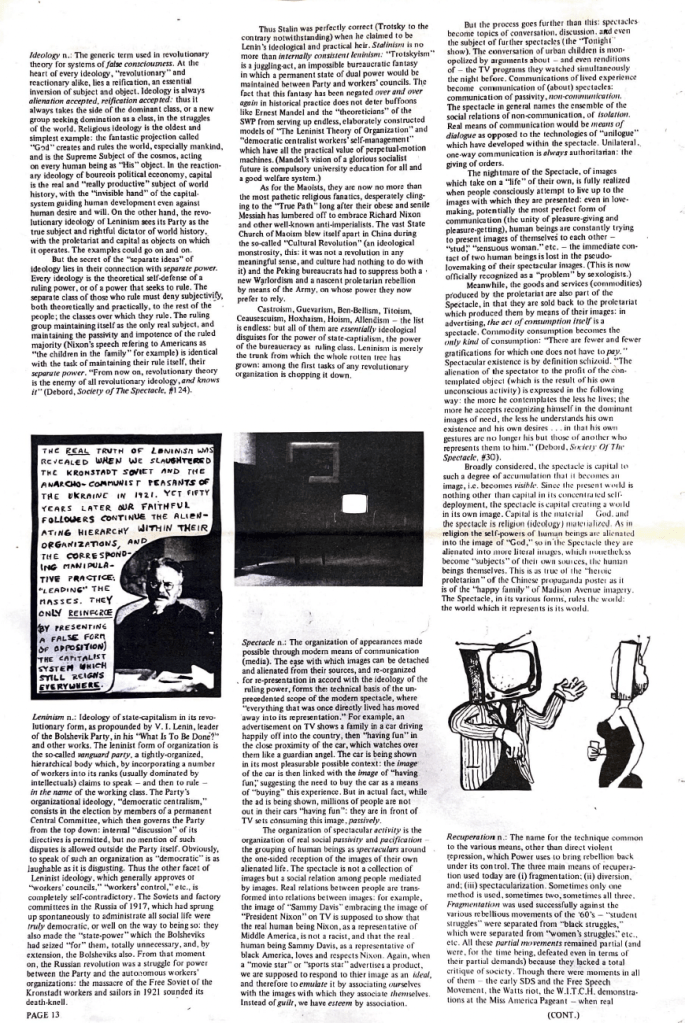
“Loaded Words: A Rebel’s Guide to Situationese,” by Denis Diderot and Jean-Paul Marat (pseud.) in New Morning: A Berkeley Community Newspaper. February, 1973.

Cover of New Morning, February, 1973.

We first heard of “Loaded Words” via the very useful bibliography of American pro-situationist publications that Not Bored! put together years ago and posted on their website (here). We were confused because they put Cleveland as the place of publication, where there was a newspaper by a collective also called “New Morning” (info here). But the piece was actually published in the Berkeley publication New Morning: A Berkeley Community Newspaper.

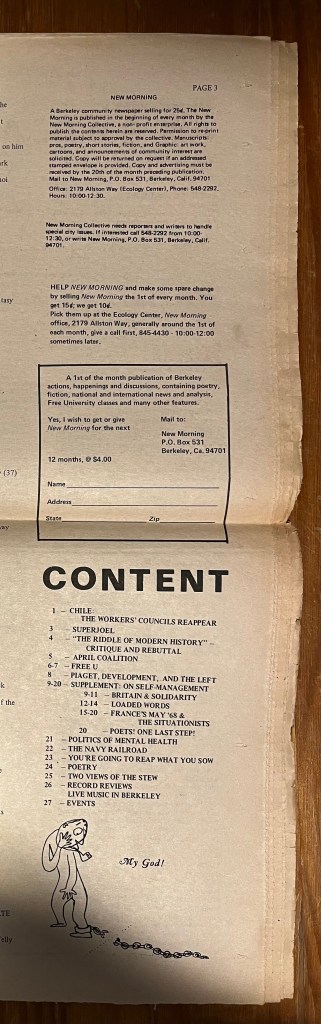
There is no online archive of New Morning issues and very little writing that mentions the publication from what we could find. (There must be a memoir that includes discussions of it somewhere, please let us know if you are aware of any!) There’s not much detail in the publication itself. Here’s the masthead from the February, 1973 issue:

Tom Woodhull, part of the pro-situ group Negation (as mentioned in his interview with Chomsky, here), had some involvement with New Morning for at least a couple of issues, as he was also involved in the preceding month’s issue that included an article on council communism. This issue was likely that mentioned by Ken Knabb in his essay “Remarks on Contradiction and its Failure,” when he cites “an underground paper trying to fill up the current ideological void will put out a special issue on situationism which simply lumps together everyone who is able to babble a few slogans about the spectacle, sacrifice, Leninism, etc., and publishes a “Dictionary of Situationese” for the edification of those who aren’t yet even capable of that.”

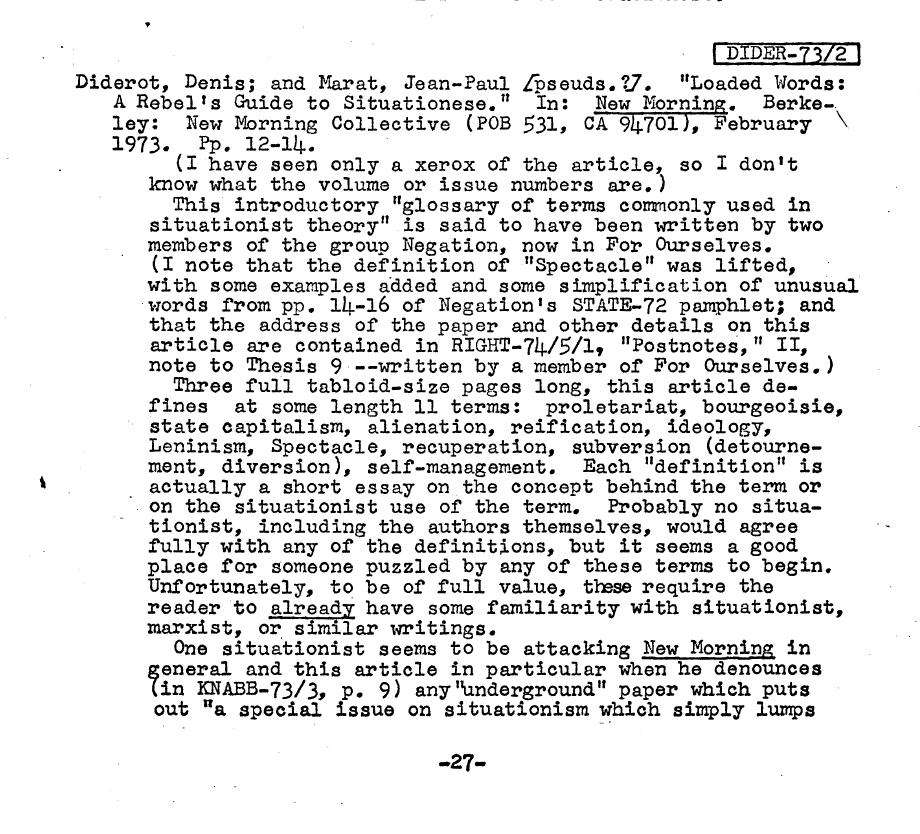
Yet, even given Knabb’s criticisms, “Loaded Words” is, in fact, a good, quick and dirty introductory guide to core situationist concepts. It seems reasonable to guess that Woodhull may have been one of the two pseudonymous authors. In 1975 the “Beni Memorial Library” in Ann Arbor published a very helpful book (available here) called A Bibliography of North American Situationist Texts, which included an entry on “Loaded Words”:

We see no reason to repeat the contents of that entry (anymore than we already have), since it does the bibliographic job quite well.

We were surprised that “Loaded Words” hadn’t been placed online yet, so we scanned it and put it on Libcom, here.

This issue of New Morning is uncommon, though available, it appears, in some microfilm collections of the underground press and in a handful of libraries.

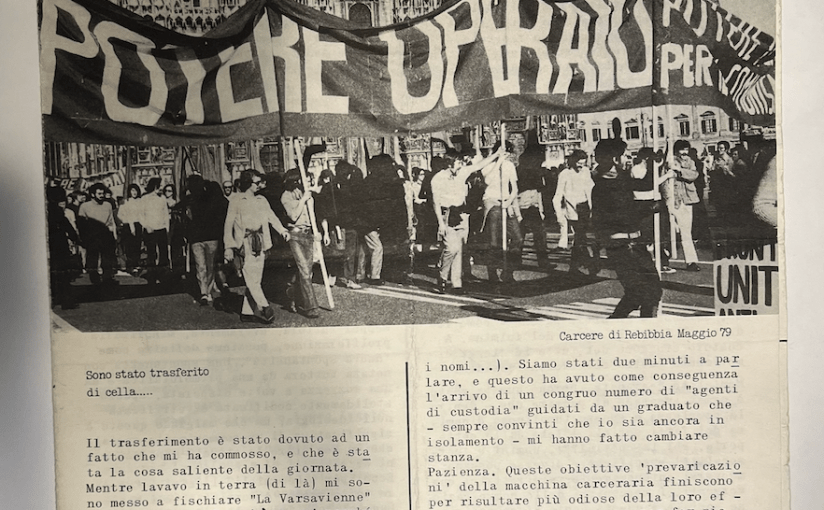
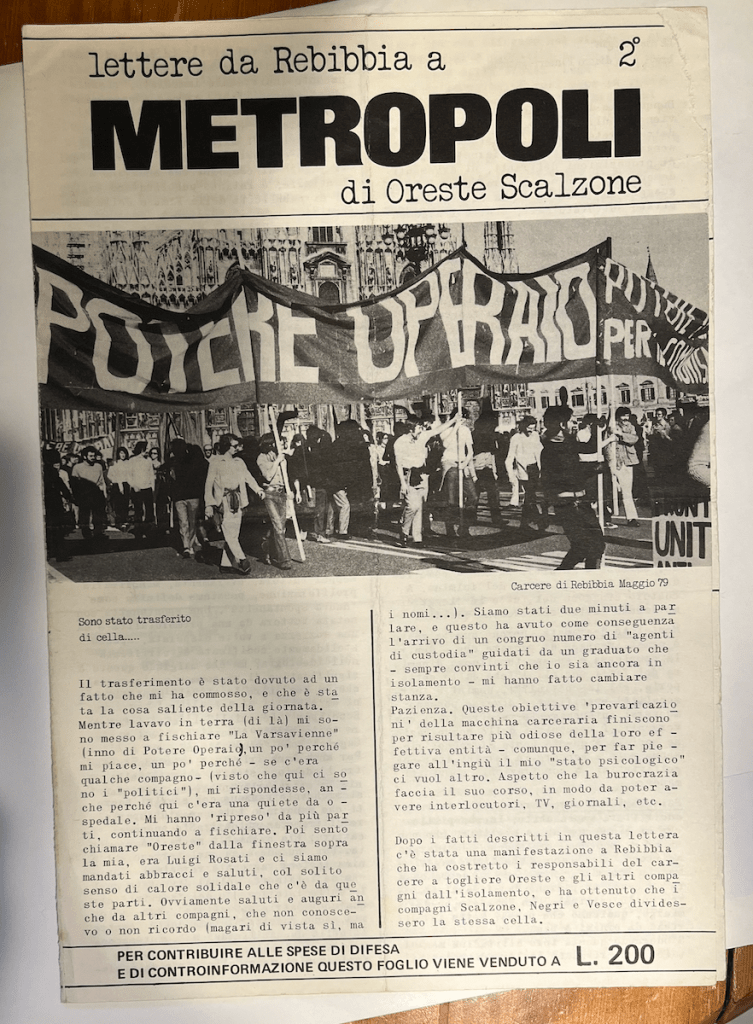
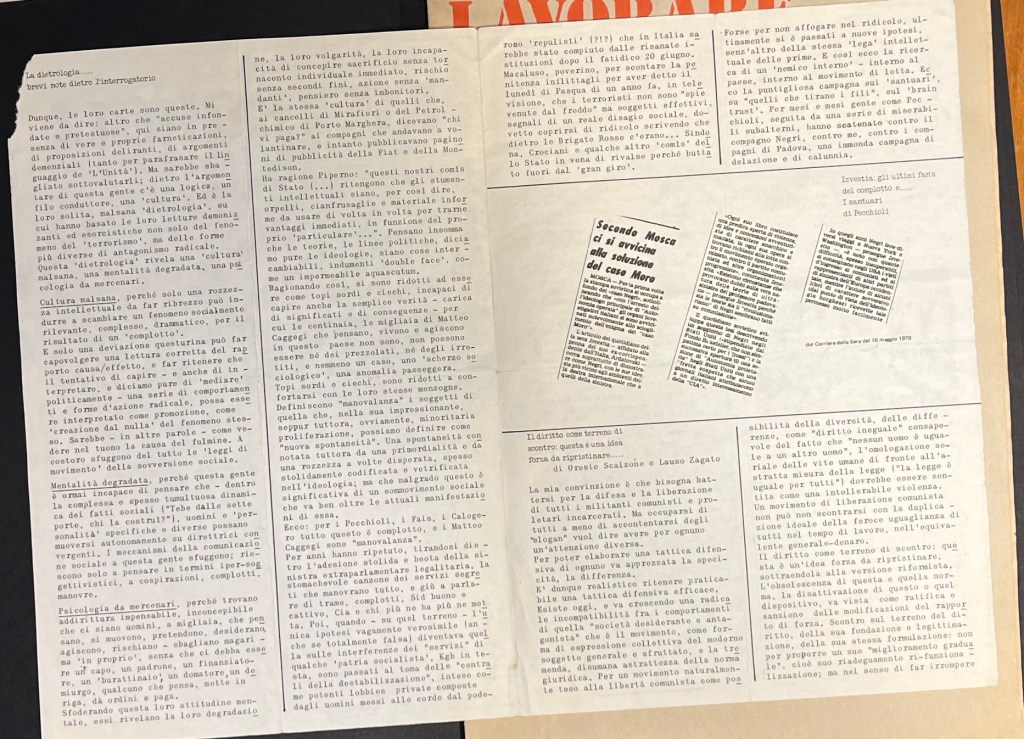
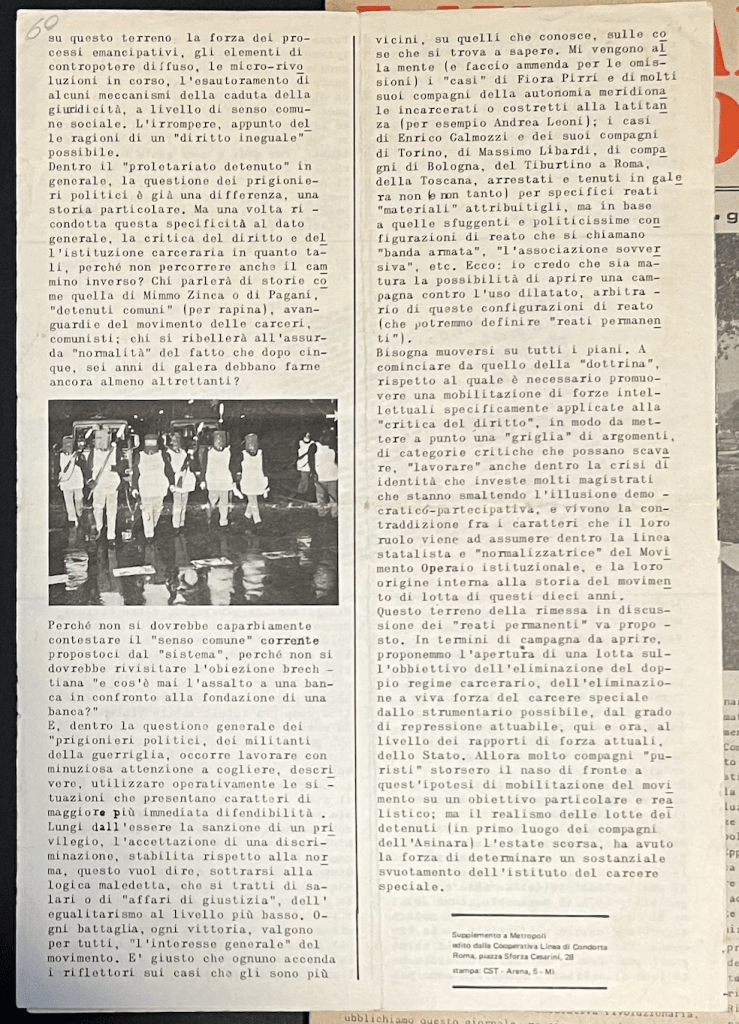
“Lettera da Rebibbia a Metropoli di Oreste Scalzone” (supplement to Metropoli) – May 1979

Following the mass arrests of April 7th, 1979, where militants and intellectuals were arrested on conspiracy, subversion and insurrection charges (tens of thousands would be arrested across the following years). Antonio Negri, famously, was part of the sweeping round-up, having been wrongly accused of being part of the Red Brigades and behind the killing of former prime minister and leader of the Democrazia Cristiana party, Aldo Moro. Many of the prisoners were incarcerated at Rebibbia Prison in Rome.

A May 1979 statement, signed by Mario Dalmaviva, Luciano Ferrari Bravo, Toni Negri, Oreste Scalzone, Emilio Vesce and Lauso Zagato, states:

“We are being tried for a decade of political struggle in Italy, from 1968 to 1979. With this prosecution, State power has spoken out loud and clear — a horrendous alibi for its incapacity to resolve the real underlying problems confronting Italian society in the crisis. This trial is aimed to outlaw the political movement of working class and proletariat autonomy. In order to succeed, State power has to state and prove that “the party of the new social strata of the proletariat” is the same thing as “the armed party” — i.e. the terrorist groups. They have to be made to appear as identical. All of us in the Movement know the motive behind this operation. The State “projects” onto these strata and onto the men and women who have lived the social struggles of the new proletariat, the accusation of being terrorists, “the armed party in Italy”, so that, by criminalizing the Movement, it can resolve its own inability to function. We are militants and intellectuals of the autonomous Left movement. In striking its blow at us, the State is attributing to us a power as “leaders”, a representative role, that we do not possess.”

Oreste Scalzone, a leading militant of Potere Operaio, and a founder of the important journal Metropoli, was one of those arrested (his arrest occurred two months before the publication of the first issue of the journal). This supplement to Metropoli was published before the printing of Metropoli’s first issue in June 1979. The second issue of the journal was published, nearly a year later, in April 1980.

The pamphlet is divided into 3 letters from Scalzone, with one co-written with militant prisoner Lauso Zagato. The first letter is a vivid description of camaraderie on the inside, with Scalzone finding other comrades in the prison before being forcibly transferred to another; the second is an analysis of his interrogation whereby the authorities can only see a conspiracy (and not a diffuse movement); and the third a brief analysis of, and call for struggle on, the terrain of prisons and law.

We were unable to locate a scan online so have uploaded on – here – to Libcom. The publication is rare, we locate only a single institutional holding, which is at Biblioteca Nazionale Centrale di Roma.

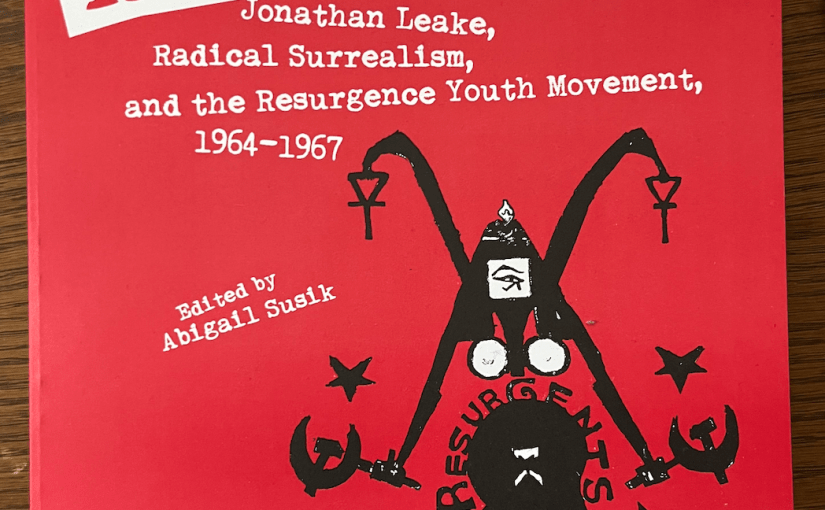
Resurgence! Jonathan Leake, Radical Surrealism, and the Resurgence Youth Movement 1964-1967 (ed. Abigail Susik, Eberhardt Press, 2023)

We are extremely excited about the publication of Resurgence: Jonathan Leake, Radical Surrealism, and the Resurgence Youth Movement, 1964-1967, printed in a limited edition of 500 copies by Eberhardt Press in Portland, Oregon.

The book helps to fill a significant gap in the literature available about the anti-authoritarian left in the US during the 1960s, as well as circulation of surrealist ideas during this period, and connections between the American ultraleft of the 1960s and the punk and squat scenes in New York City in ensuing decades.

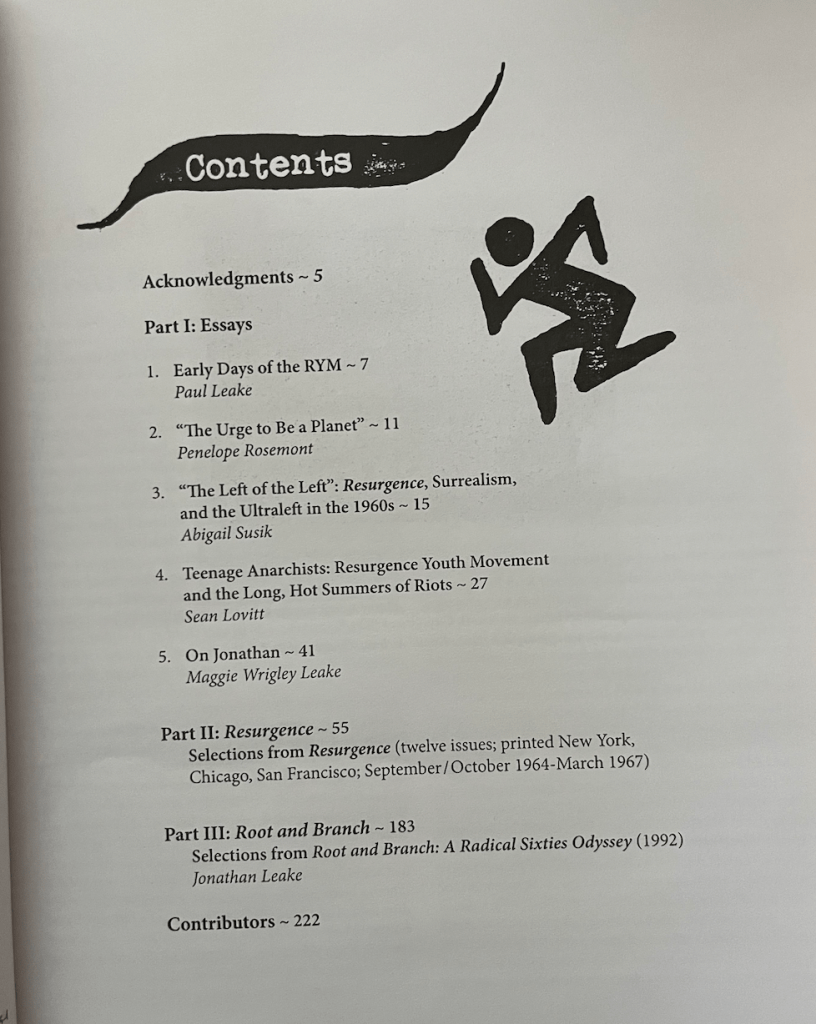
The book is divided into 3 major sections. The first consists of essays that contextualize the Resurgence Youth Movement. Perhaps most relevant and useful for readers of this little blog is scholar Abigail Susik’s essay on the anti-authoritarian left of the 1960s. It it is in Susik’s essay that we learn the neat factoid that the first issues of Resurgence were printed on a mimeograph machine provided to Jonathan Leake by Raya Dunayevskaya after a News and Letters convention (p. 17).

The second section of the book consists of selections from journal Resurgence, much of which was impossible to access up until the publication of this book. The third section of the book consists of selections from Jonathan Leake’s unpublished autobiography, Root and Branch.

The design of the book is simply breathtaking and is clearly a labor of love printed by Charles Overbeck, the person behind Eberhardt Press.

Ill Will has published some selections from the book, here. It is available for purchase, until the print run is gone, from Eberhardt’s website, here. We hold donor’s copy #19 in an edition of 150.

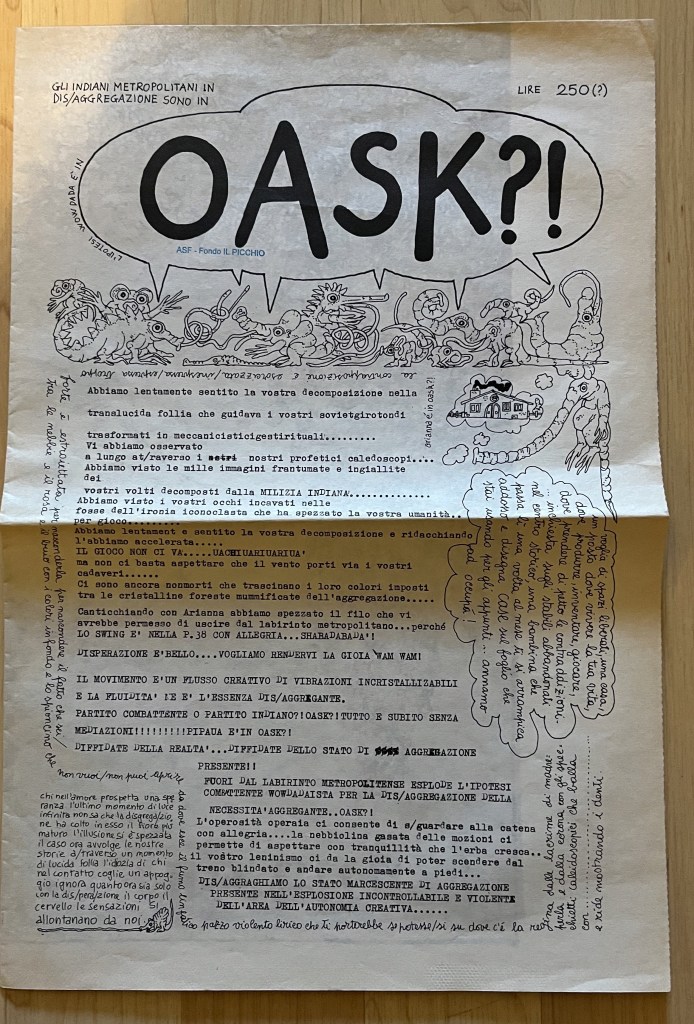
Oask?! – Unique issue, 1977 (Pablo Echaurren, w/ Maurizio Gabbianelli, Massimo Terracini, Pablo Echaurren, Gandalf, and Carlo Infante).

Oask?! cover

Oask?! (an anagram of “kaos”) was the first publication of the Metropolitan Indians. It was published as a supplement to issue 74 of Lotta Continua, and is primarily the work of famed Italian artist Pablo Echaurren. This was the only unique issue of Oask?! published, but Echaurren would use the nameplate in other collaborations (for example the publication of Abat/Jour). At the time, Echaurren worked full-time for Lotta Continua.

Jacopo Galimberti (2022) provides useful discussion of the context and publication of Oask?!,

“Apart from his work for Lotta Continua, Echaurren and some peers published a zine called Oask?! (an anagram of caos, meaning ‘caos’). Released in the aftermath of the March 1977 revolts, its graphic look took the inventions of A/traverso and Zut to the extreme” (p. 339-340).

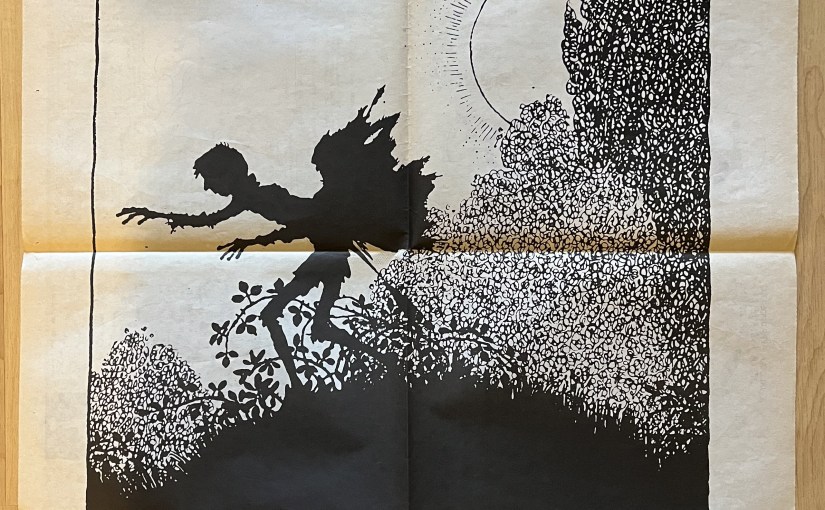
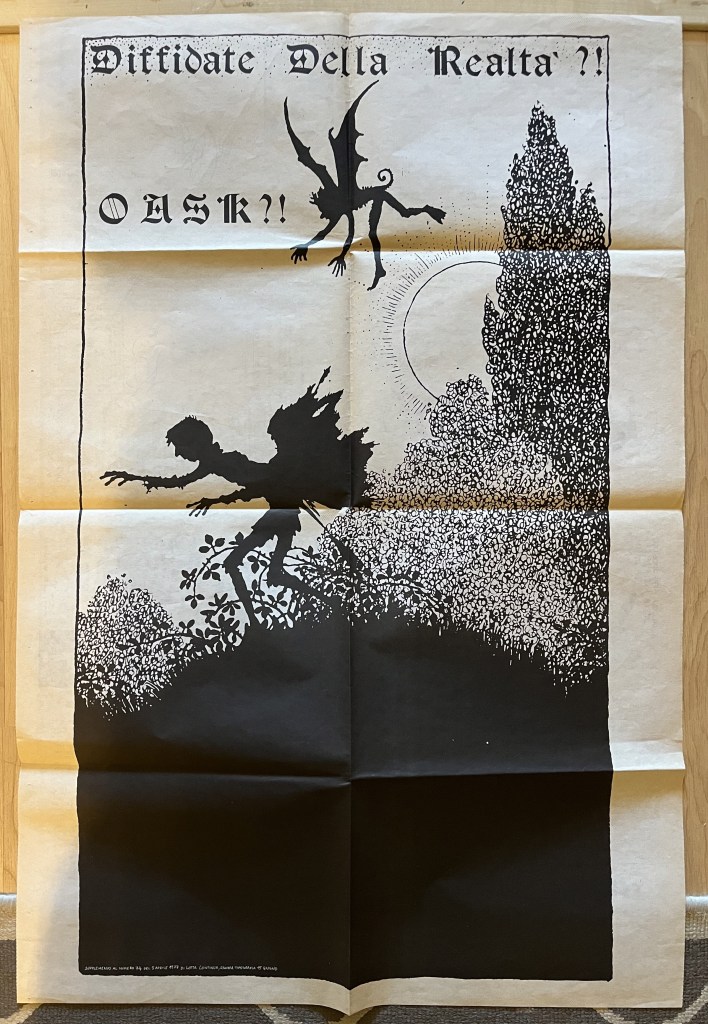
The publication is one large single piece of newsprint that folds out to a stunning poster, reading “Diffidate della realta?!” (“Do you trust reality?!).

We take the listing of authors from Echaurren’s digital archive at the Bibliotheca Hertziana (Max Planck Institut) in Rome, which hosts a high resolution scan of the initial version of Oask?! that they credit exclusively to Echaurran (here). We note that De Donna & Martegani (2019) list the authors as Echaurren, M. Gabbianelli, Carlo Infante, G. Malatesta, S. Pela, R. Di Reda, F. Saglio, M. Terracini, and O. Turquet (p. 332).

The publication is rare. Worldcat lists the Beinecke library at Yale as only institutional holding (they bought Echaurren’s archive some years ago), but we know others hold the publication.