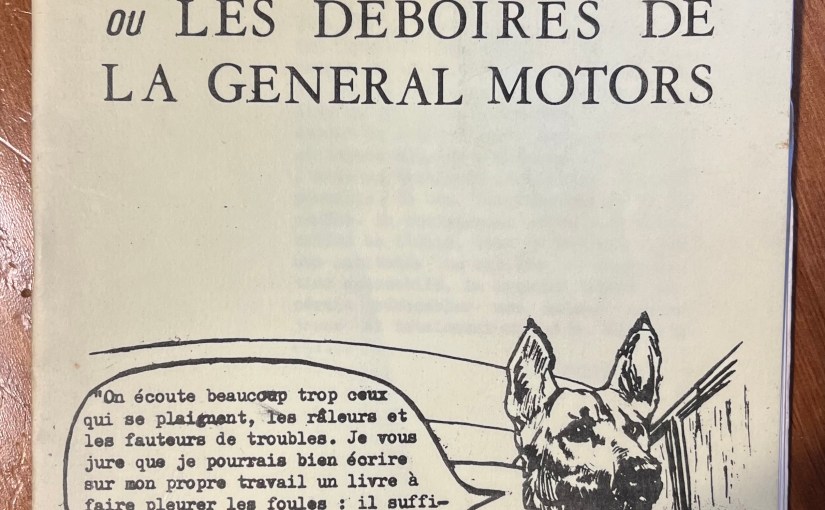

First edition of this pamphlet, published without authorship, in 1973. While it is often stated that the pamphlet was published in 1977, that doesn’t make sense from the content of the essay, which is clearly contemporaneously written during the upsurge of factory-based struggles in the early 1970s. The 1977 edition refers to the second edition, which was published by Editions de l’Oubli and includes a notation that the first edition was published in 1973.
This essay is a powerful communist analysis of the struggles at the GM plant in Lordstown, Ohio, that was opened in 1970. In 1972 the overwhelming majority of workers voted to authorize a strike. But Lordstown 72 focuses less on the strike authorization or actual strike than on the culture of working class sabotage and self-organization that it occurred in.
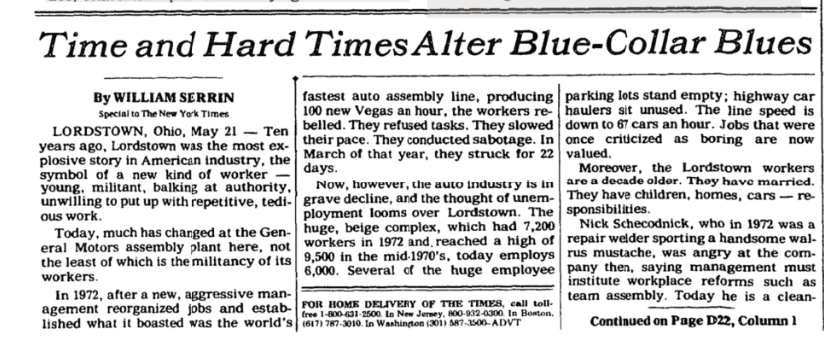
The essay is a striking assessment of the generalization of sabotage and everyday resistance, which occurs in context of widespread forms outside of the union and party structures. The author(s) analysis seamlessly flows from shop-floors in the U.S. to those in Italy and elsewhere. From a culture of resistance the author(s) then try to locate seeds of communism in the workers’ struggles.
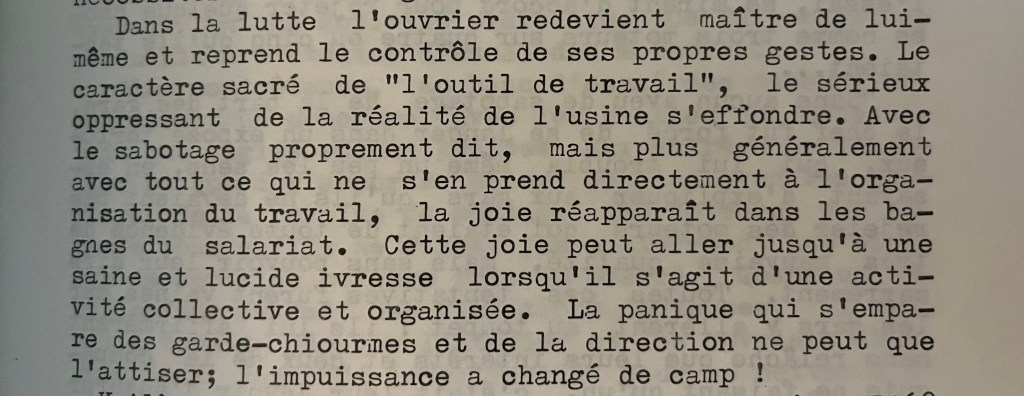
“In the struggle, the worker regains control of himself and his own movements. The sanctity of the
“tool of the trade”, the oppressive seriousness of factory reality, collapses. With sabotage itself, but
more generally with anything that directly attacks the organization of work, joy reappears in the
prisons of wage labor. This joy can even lead to a healthy, lucid intoxication when it comes to
collective, organized activity. The panic that grips the guards and management can only fan the
flames; impotence has changed sides!” (translation via Deepl, so there may be errors).
As mentioned above, the first edition of the pamphlet stated no authorship. The second edition would attribute its authorship to “Pomerol et Medoc,” though those appear to have been pseudonyms. The pamphlet was produced as a supplement to the fourth issue of 4 Millions de Jeunes Travailleurs and published, presumably by the same people, under the moniker of Les Amis de 4 Millions de Jeunes Travailleurs. The group published a number of relatively important essays within the French ultra-left milieu of the 1970s, as well as a collection of pieces from the Internationale Situationniste. The major figure behind the project, at least from what we could find online, was Dominique Blanc, who would later go on to found the antisemitic journal La Guerre Sociale.
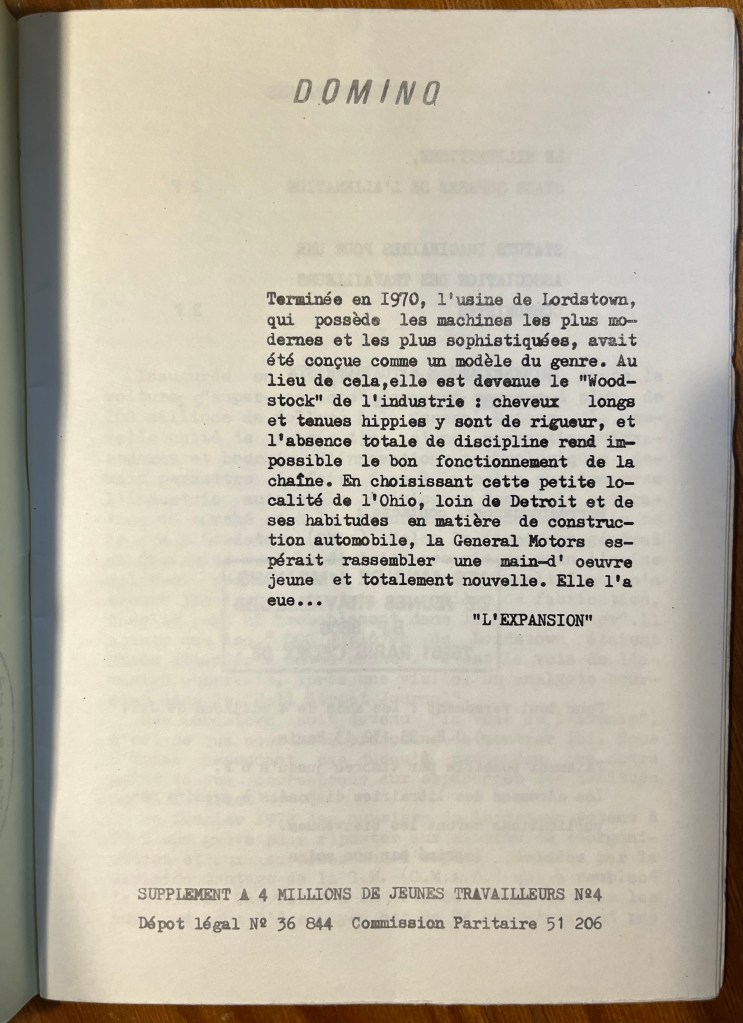
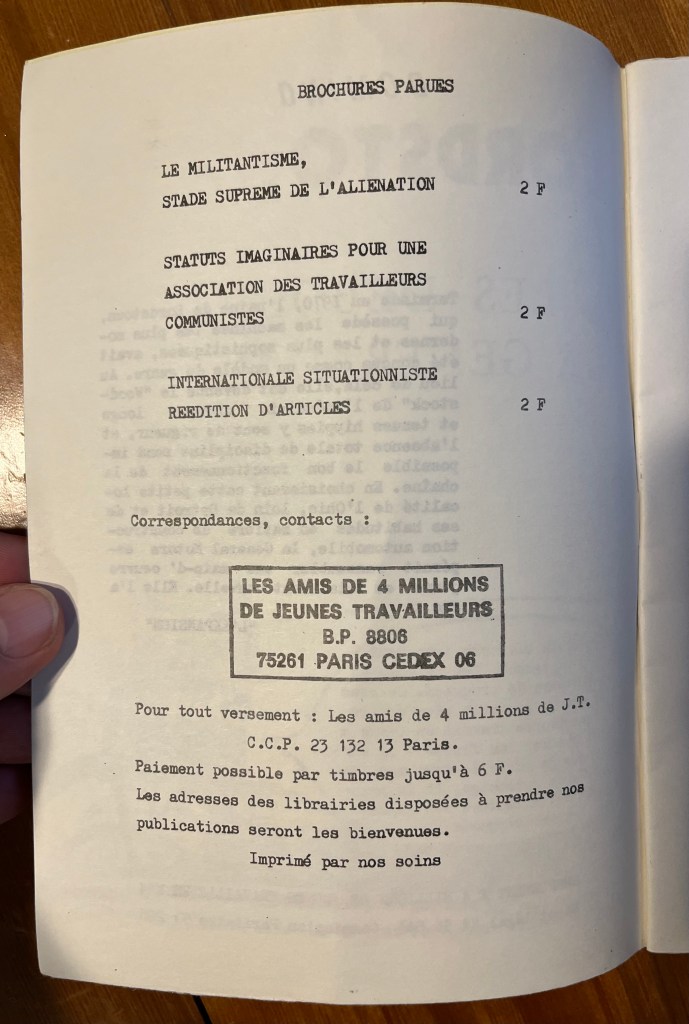
The first edition of the pamphlet is rare. Copies very rarely show up in the trade. We did not locate any on OCLC but copies are probably held in one of France’s anarchist libraries.
 New York Archives of Autonomist Marxism