N’Drea has been kept in circulation because anarchists and fellow travelers have been committed to making it so for the past thirty years. In a period where the term “care” is used all across the radical left, increasingly to a point of nearly unlimited (and near-meaningless) expansiveness, N’Drea stands out as a particularly substantive reflection on illness, death, and medicine, in context of contemporary capitalism, and a powerful reminder of comradeship, friendship, and autonomy.
Andrea was diagnosed with cancer in 1985. She suffered both breast and lung cancers. She submitted herself to chemotherapy and other treatments and, when those were unsuccessful and she was asked to consent to participate in experimental treatment, she made the carefully considered decision to refuse. She subsequently disconnected from medical engagement entirely. She passed away in 1991. This book is a collection of letters (to her nurses, to her friend Bella) and reflections on her experiences and their context.
The pieces in this book are written in conversation with the movements of the mid/late 1980s and early 1990s, particularly the anti-nuclear struggles and the movement of people with AIDS. At one point Andrea writes, in frustration, “Having been rather successfully conditioned and rendered guilty as to the extent of our ignorance, we cancer patients have failed up to now to fight back, as some AIDS sufferers have done, by calling the bluff of all those medical researchers whose bluster and trumpet blowing on the subject of their supposed discoveries are nothing but a cover for their own very considerable confusion” (p. 33-34 of the Eberhardt edition).
Andrea was a member of the French anarchist group Os Cangaceiros, who have become storied (to the point of fable) in anti-authoritarian milieus’ across the globe (Rolling Thunder, Crimethinc’s journal, had useful commentary on the reality vs. the myth of Os Cangaceiros in their eighth issue, here).
It is worth taking note of the name of the author – Andrea Doria. The full name “Andrea Doria” appears once in the original French text, in the second to last letter written to Andrea’s friend Bella. It is entirely conceivable that this was Andrea’s legal or chosen name, and it is also entirely conceivable that this was a pseudonym. “Andrea Doria” is, of course, also the name of an historically notable 15th & 16th century Italian statesmen, and later the SS Andrea Doria – an Italian luxury ship that sank on its way to New York in 1956.
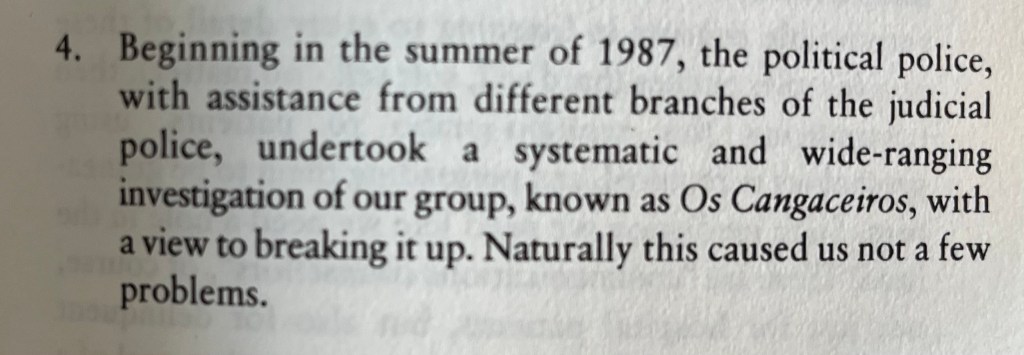
The context of the book makes knowing this particularly difficult. Andrea, as a participant in Os Cangaceiros, reports to have been under significant surveillance from the police beginning in 1987:
As a group that purportedly survived for many years via robbery and petty crime, shielding identity would have been an important part of the Os Cangaceiros project. Moreover, the use of pseudonyms was (and is) common practice in the milieu of the pro-situ and anti-authoritarian left, for reasons practical, political, and theoretical.
We also do not use the subtitle that has been repeatedly used, “One Woman’s Fight to Die Her Own Way,” which initially appeared in the first formal English-language translation, published by Pelagian Press in 1998.
For purposes of this bibliography we are only including formally printed editions of the book. That means there are other versions of it that we are leaving out, for example editions we have found online that seemed to have been published as photocopied pamphlets by anarchist presses etc. This isn’t to minimize the importance of that kind of pamphleteering work, but including those would make this kind of bibliography less useful. That said, at the end of the post we are including links to each of those in a bulleted list.
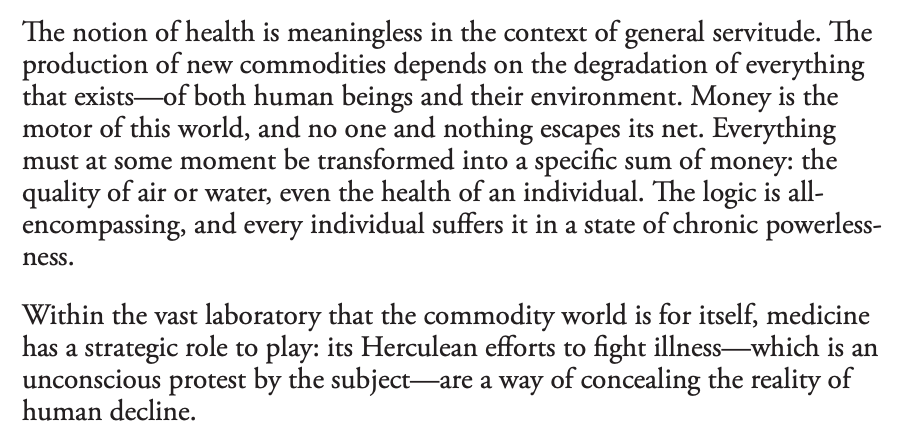
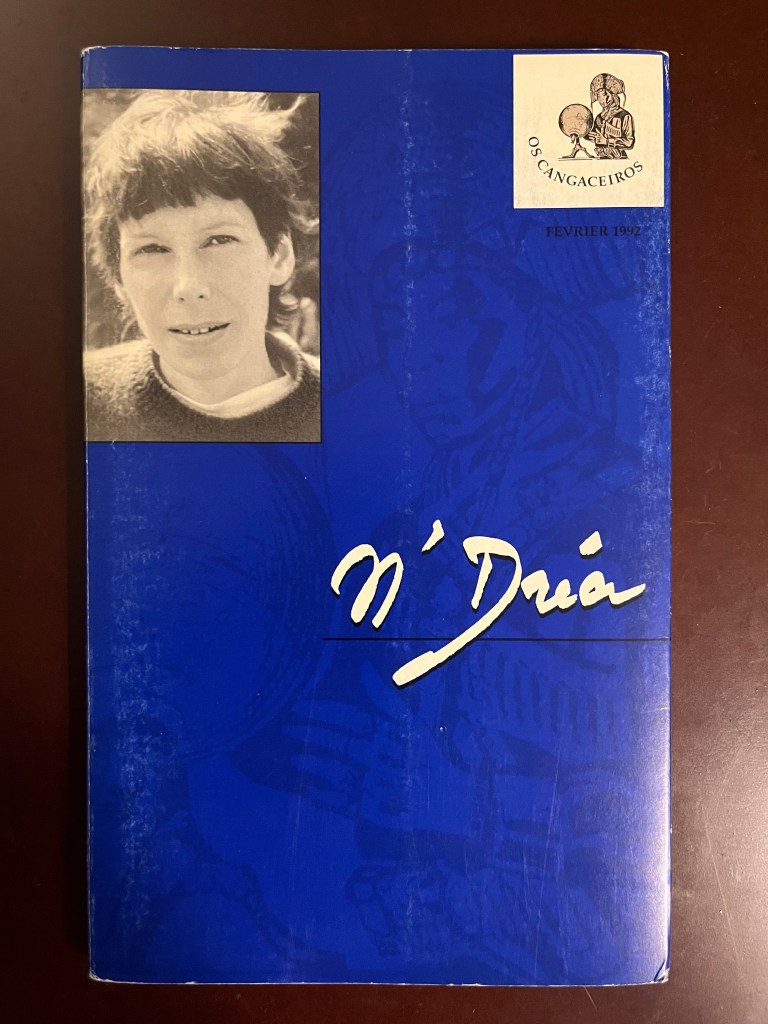
First edition, February 1992. Self-published by Os Cangaceiros. French language.

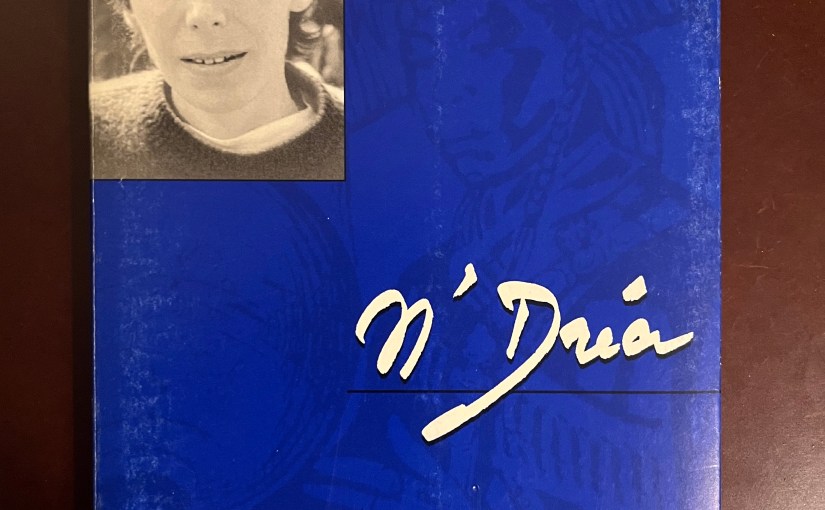
The first edition was self-published and is uncommon but shows up from time to time in the book trade (at the time of writing there is one known copy available from a French seller). This original version is where one finds the pictures of Andrea – the headshot, the picture of her dancing – that show up in later editions (sometimes as copies, sometimes as drawings). It is 65pp (and priced at 30f). We could not find any institutionally-held copies in OCLC.
First Italian edition. May, 1993. Published as N’drea: Medicina maledetta e assassina by Quattrocentoquindici.
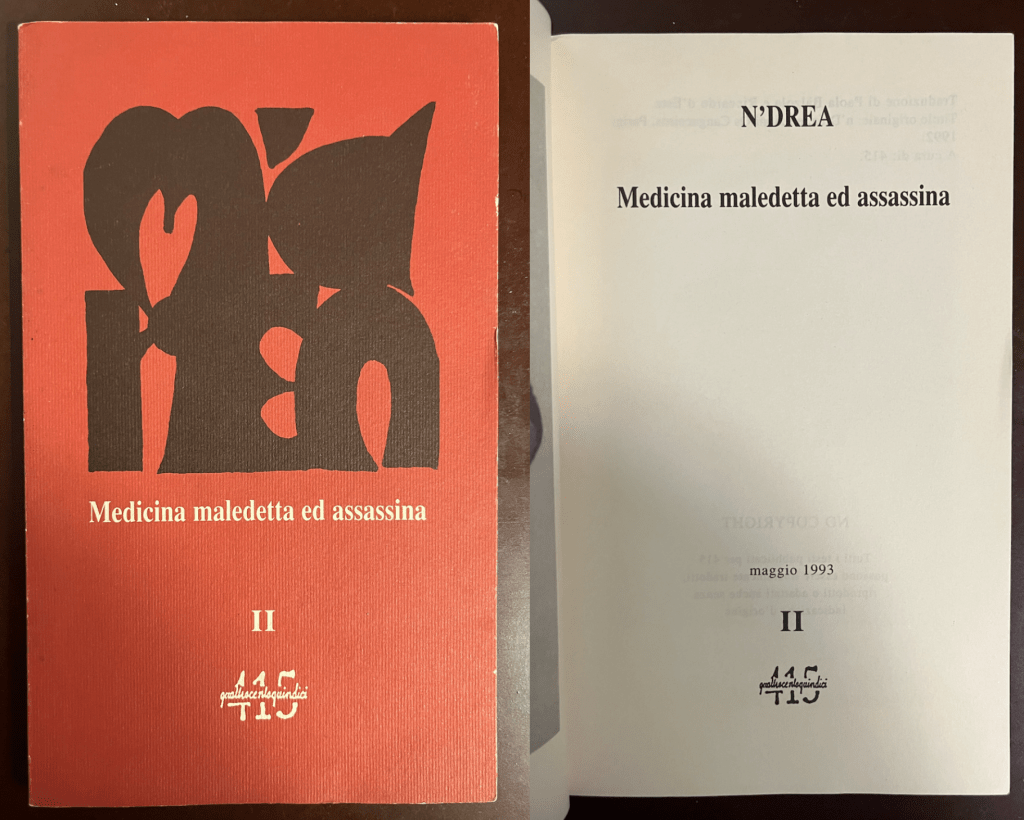
The first Italian edition was published by the anarchist and post-situ press Quattrocentoquindici (415) and, to our knowledge, was the first published translation after the original French edition. It is arguably the hardest to find edition of the book. This edition includes an introduction by the publishing collective, as well as essays by Giorgina Bertolino (“In ospitale”) and Ricardo d’Este with Simone Peruzzi (“La maledizione e l’assassinio”). A scanned edition of the full book can be found online, here. As an aside Ricardo d’Este – of whom Guy Debord once wrote that, “In 1968 he did the most in Italy to import the spirit of [the French] May and notably among the workers” – may be familiar to readers of this blog as a significant name in the history of Italian’s communist left, including as a founder of the “comontismo” current. We found no institutionally-held copies in OCLC.
First Spanish edition (Castilian). November, 1993. Published by Virus Editorial in Barcelona.

The first Spanish (Castilian) language translation came out a year after the first French edition and was published by Virus Editorial, the now-long-running anarchist press based in Barcelona, which had started just about two years earlier. The Virus edition is out of print but is pretty common in the book trade. OCLC locates one institutionally-held copy at the Universidad del País Vasco.
First English edition (UK), published as N’Drea: One Woman’s Fight to Die Her Own way in 1998 by Pelagian Press.
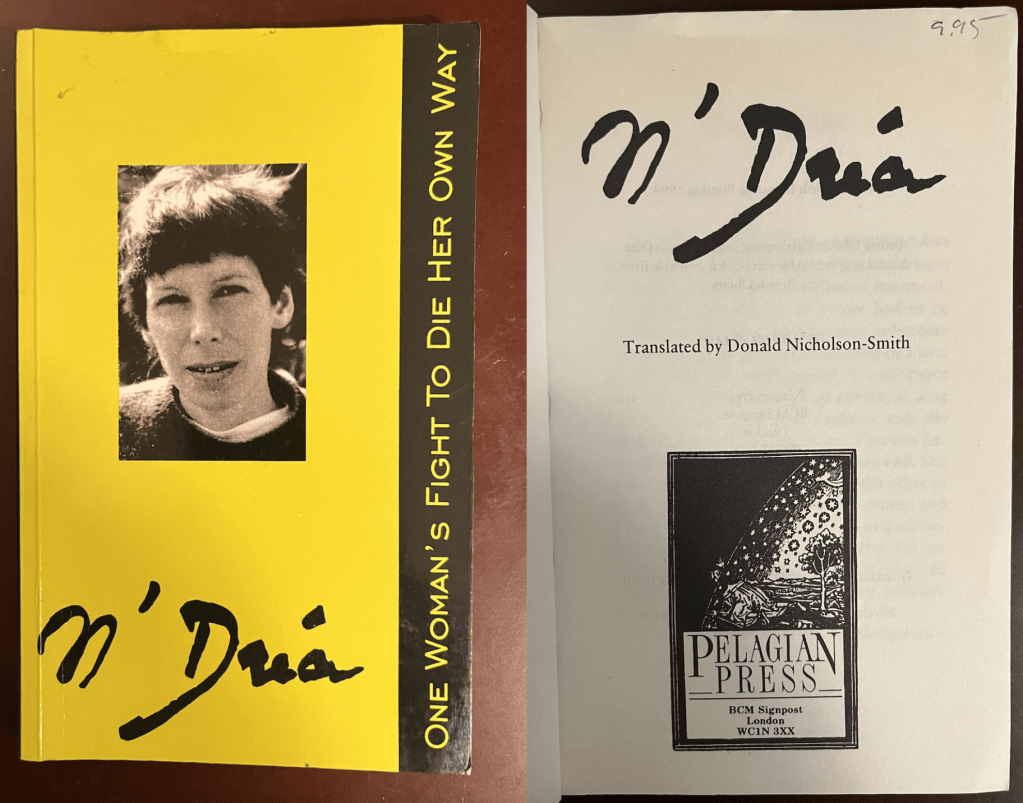
The first English-language edition of N’drea was translated, in 1997, by Donald Nicholson-Smith, a leading translator of radical French thought and former member of the English section of the Situationist International. This is the first time the subtitle of the book (“One Woman’s Fight to Die Her Own Way”) appears. It is 90 pages. According to David Wise (King Mob, BM Blob), Nicholson-Smith did the translation for free. Pelagian Press, who Wise reports was associated with the situationist-ish journal Here and Now, published this edition. OCLC locates a few institutionally-held copies of this edition, but it often appears in the book trade.
First Greek edition. Published 2006 by εκδόσεις (Foreign) Editions as Andria Doria, Η εξαιρετική περίπτωση μιας συνηθισμένης ιστορίας.

In 2006, the first Greek translation was published as Η εξαιρετική περίπτωση μιας συνηθισμένης ιστορίας (English: The Exceptional Case of an Ordinary Story) by Foreign Editions, which was also the name of a journal and the publisher of situationist titles. It was translated by Katerina Marcianoudi. This Greek edition is available online for download, here. OCLC locates no institutionally-held copies of this edition.
Second English-language edition (first US-edition) 2005, published by Eberhardt Press in collaboration with Venomous Butterfly.
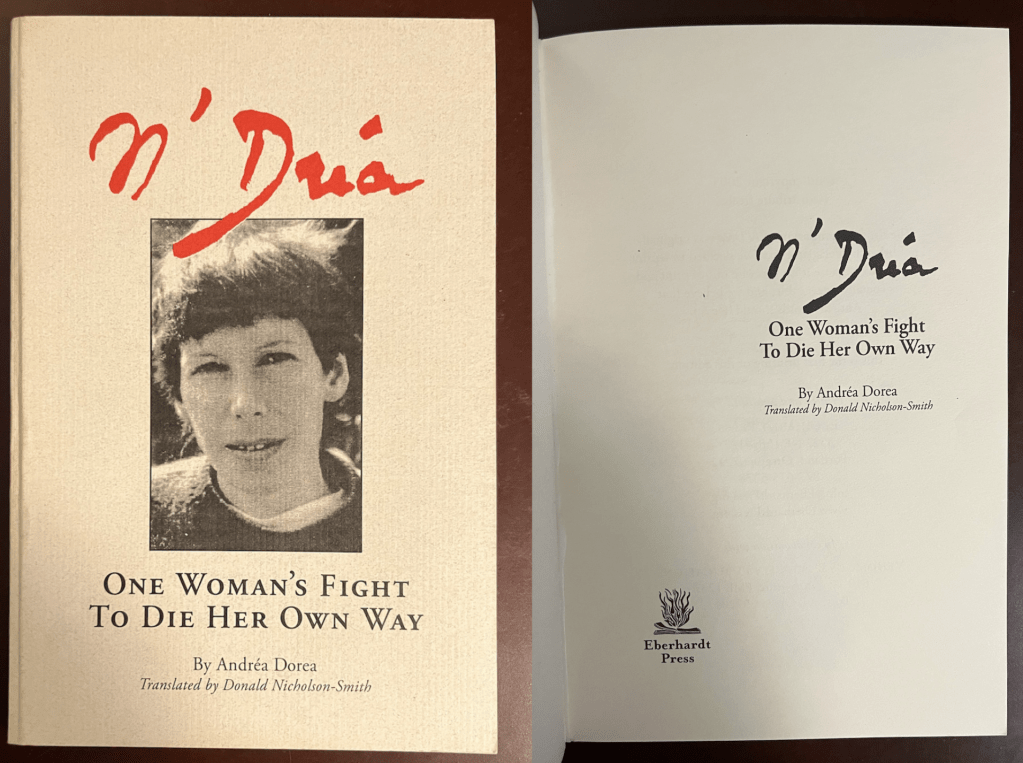
The second formal English-language publication of N’drea was a re-print of the Pelagian edition printed by the anarchist Eberhardt Press along with Venomous Butterfly (the press run by the writer who goes by Wolfi Landstreicher). A note inside the book states “We decided to reprint this book because it is otherwise out of print and generally unavailable, and we believe Andrea’s words should live on. […] This is the first printing of this edition.” While we think this is the first formal US edition, OCLC lists an earlier Venomous Butterfly edition from 2002, and we could not confirm (despite our efforts to!) either way on the accuracy of that record (if you know please write us!). The Eberhardt edition is available for download online, here. It is rare. OCLC locates no institutionally-held copies of this edition.
Second French edition, June 2016, published as N’Drea: Perdre ma vie est un risque plus grand que clui de mourir by Les editions du bout de la ville.
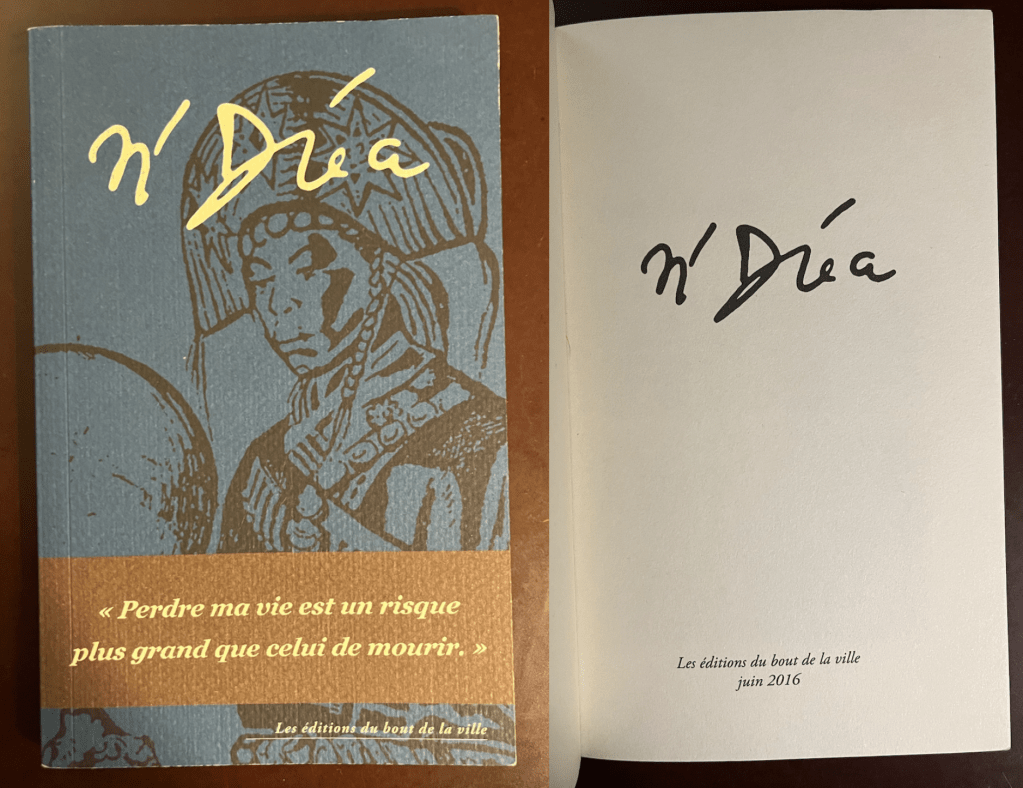
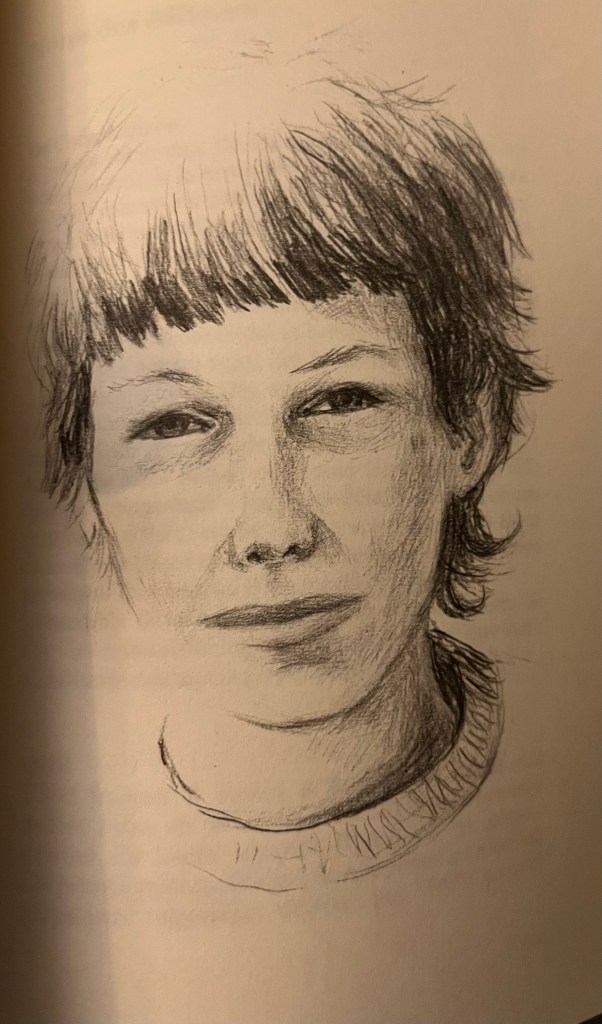
We thought that this could not be the second French-language edition, but rather the third or fourth, but we could not find proof of that and the editorial introduction notes that it had circulated for a quarter-century in French, and was translated into other languages, before it was reissued in this edition. The editors added the subtitle “Perdre ma vie est un risque plus grand que clui de mourir” (“Losing my life is a greater risk than dying”), as well as a helpful glossary. Information on the publisher can be found here. OCLC locates no institutionally-held copies of this edition.
First Portuguese edition (partial), June 2017, Barricada de Livros.
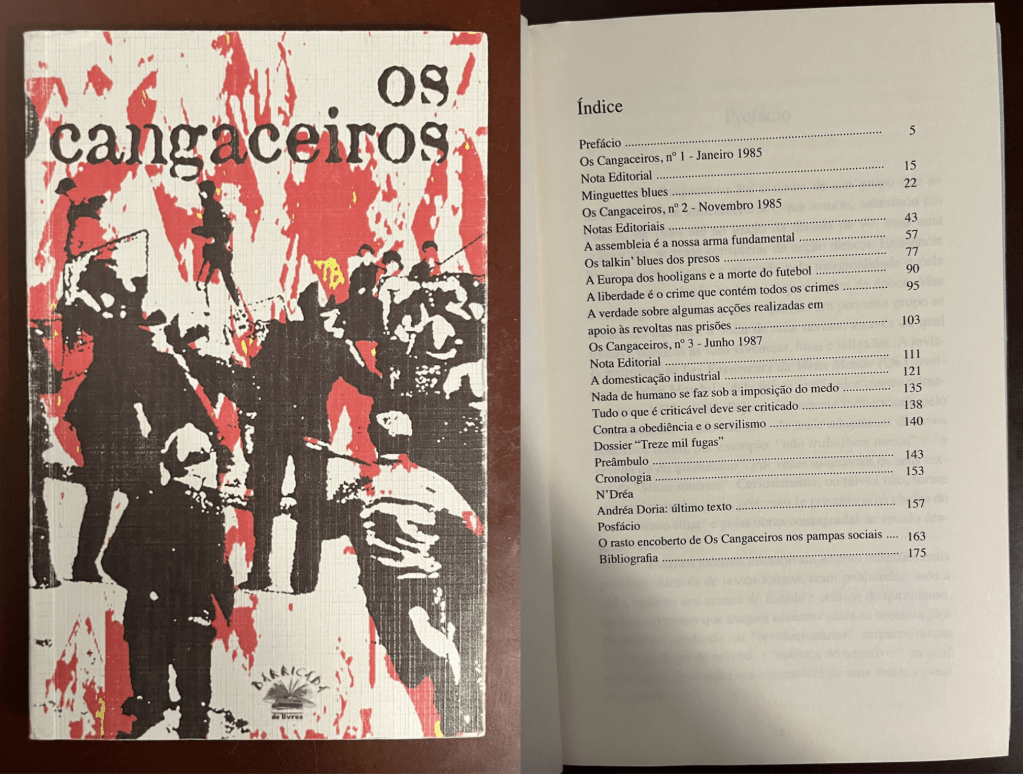
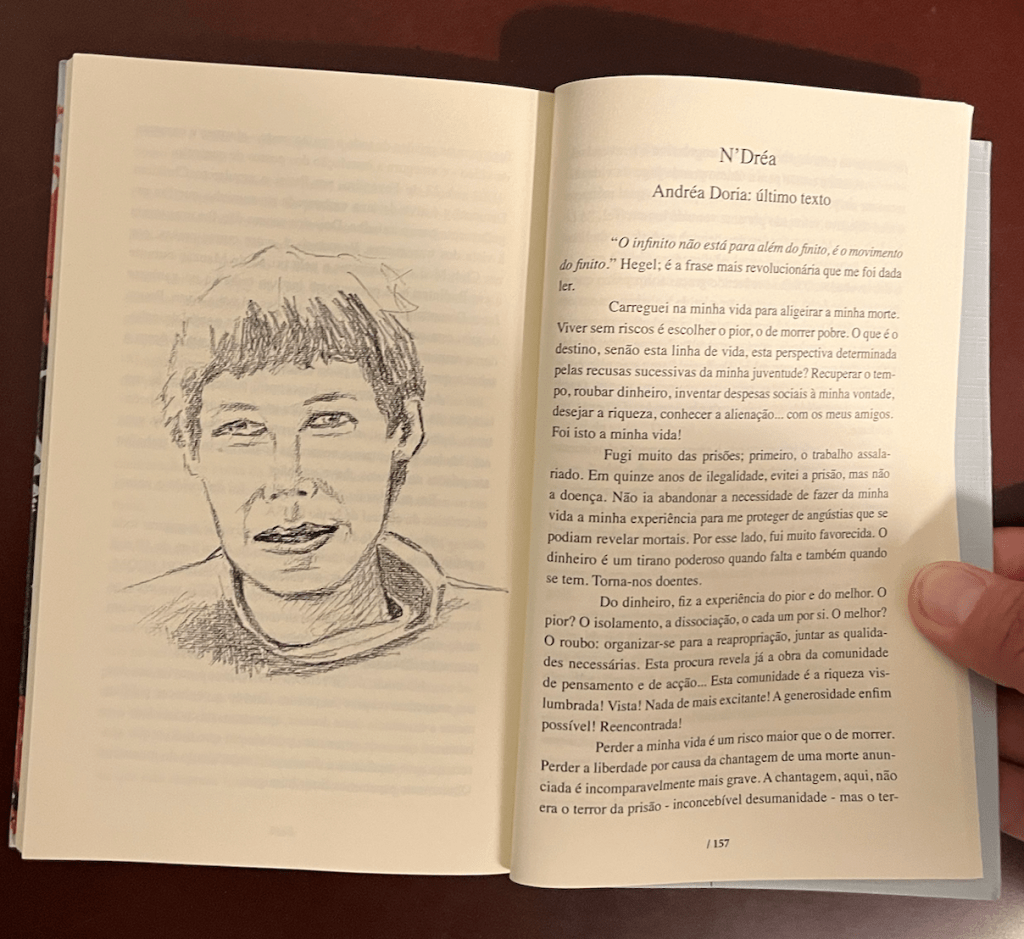
The first Portuguese translation was partial, consisting of Andrea’s August 1991 reflection (pp. 68-76 in the Eberhardt Press edition), for which the editors used the 2016 French edition. This chapter was in a book of texts from Os Cangaceiros, which is the first in Portuguese. Barricada de Livros is an anarchist publisher based in Lisbon. OCLC locates no institutionally-held copies of this edition.

